Friday, September 5, 2025

Featured

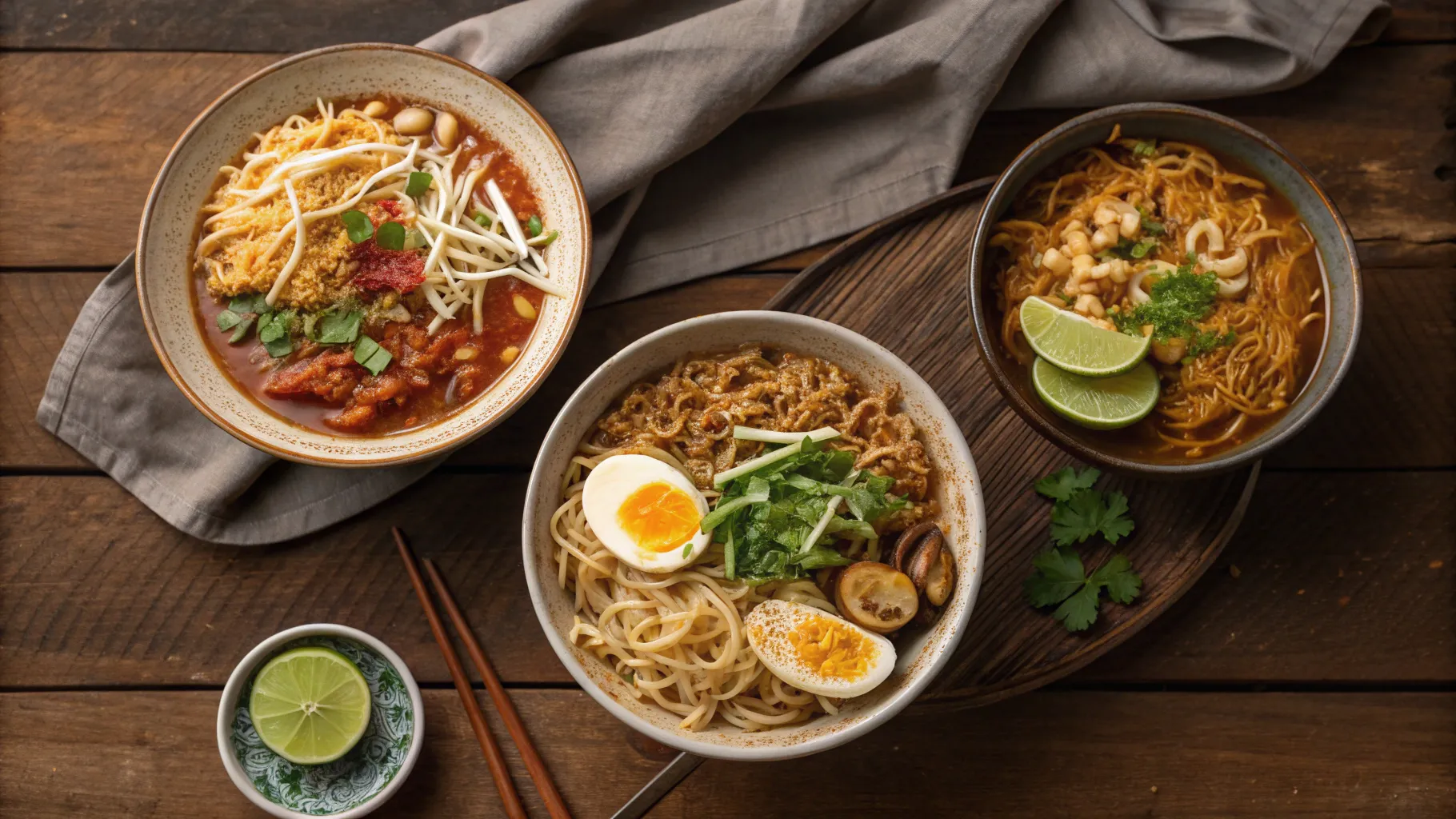
In my video I show three ways to turn a 20‑cent block of instant ramen into weeknight dinner gold. These cooking recipes, healthy foods hacks are built for speed, pantry supplies, and the exact kind of low-energy, high-flavor cooking that saves nights when nothing else is happening in the fridge.

Below are step‑by‑step recipes for: a quick‑and‑dirty pad Thai riff, a crispy anchovy‑panko pasta mashup, and a spicy chilled Korean bibim‑style noodle. Each recipe makes one hearty portion and can be doubled or tripled if you’ve got the pan space. Keep reading for ingredients, timing, and the tiny technique details that make each version sing.

Step 1: Quick‑and‑Dirty Pad Thai Ramen

This is the cheat‑code Pad Thai that leans on pantry staples. Yes, ketchup is doing heavy lifting in place of tamarind—don’t judge it until you try it.
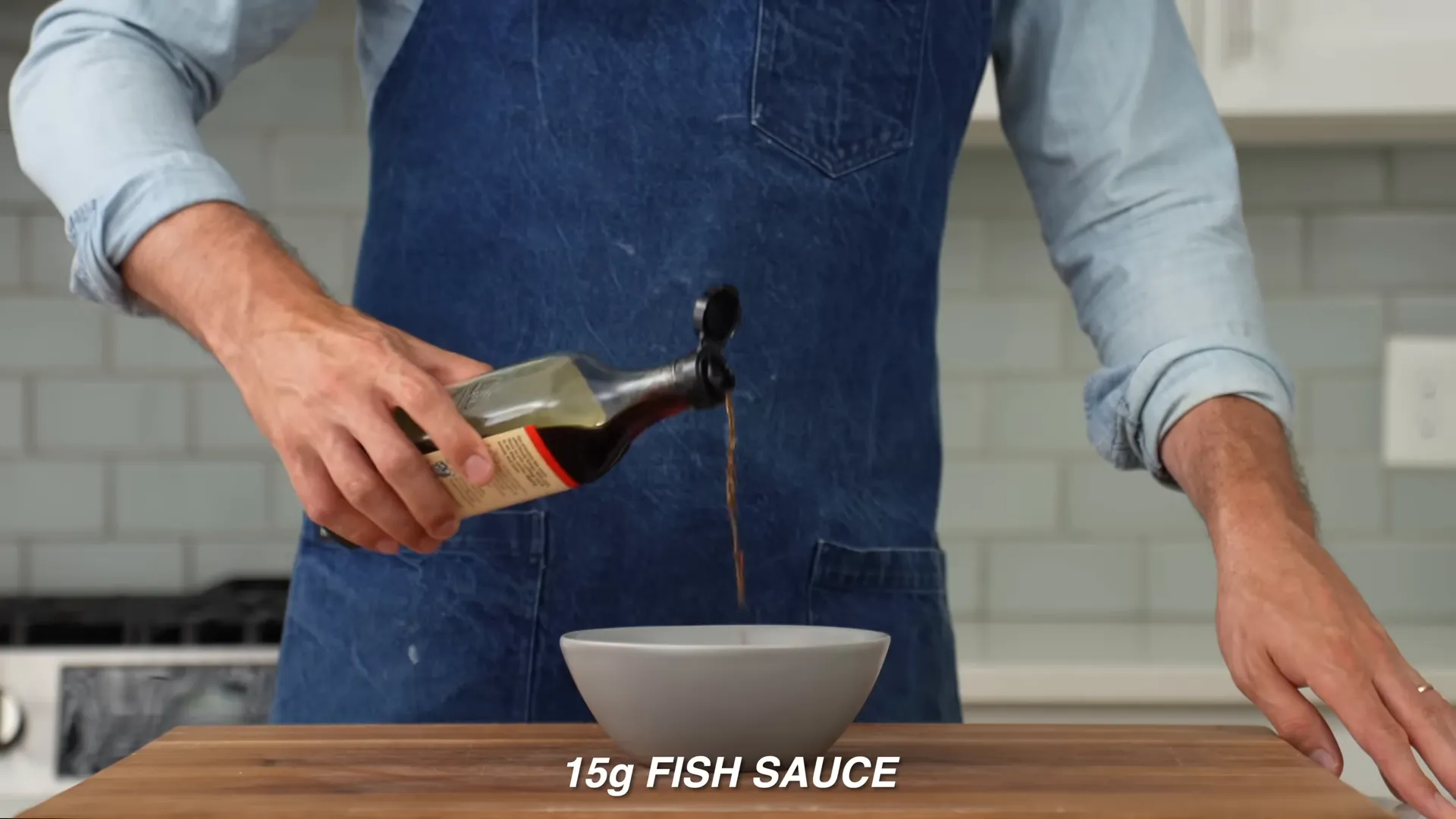
Mixing pad Thai-style sauce in a bowl

Ingredients

  • 15g fish sauce
  • 5g rice vinegar
  • 10g ketchup
  • 15g brown sugar
  • 5g peanut butter
  • 30g peanuts, roughly chopped and sifted
  • 20g scallion greens, thinly sliced
  • 10g ginger paste & 10g garlic paste (or fresh)
  • pinch chili flake
  • 1 large egg
  • 15 mL neutral oil
  • 350g water
  • 1 block instant ramen (discard seasoning)

Method

  1. Whisk fish sauce, rice vinegar, ketchup, brown sugar and peanut butter until sugar dissolves. Set aside.
  2. Heat half the oil in a wok or wide nonstick pan over medium‑high. Add beaten egg with a pinch of salt; let set ~15 seconds then scramble to ~90% cooked. Transfer to your serving bowl to save dishes.
  3. Return pan to heat, add remaining oil, then ginger paste, garlic paste and chili flake. Sauté ~30 seconds while stirring constantly (tubed pastes burn fast).
  4. Pour in the sauce and 350g water. Bring to a boil, add the ramen block, simmer 1 minute, then flip like a book so noodles submerge. Stir apart and cook ~3 more minutes until tender and sauce reduces to a glossy glaze.
  5. Fold scrambled egg, scallions and chopped peanuts into the noodles. If sauce is loose, reduce another minute or let noodles soak—the noodles are thirsty.
  6. Serve topped with extra peanuts and scallions.

Why this works: the ketchup + fish sauce + peanut butter combo creates fruity, savory, and nutty layers fast. The straining step for peanuts is optional but prevents gritty texture from peanut powder.

Step 2: Anchovy‑Panko Ramen (Cacio‑Pepe + Puttanesca vibes)

This is late‑night genius: crunchy toasted panko, melted anchovy flavor, butter and Parmesan for a glossy finish. It’s one of my signature dishes and a terrific example of pantry pantry alchemy—another winner in the cooking recipes, healthy foods playbook.
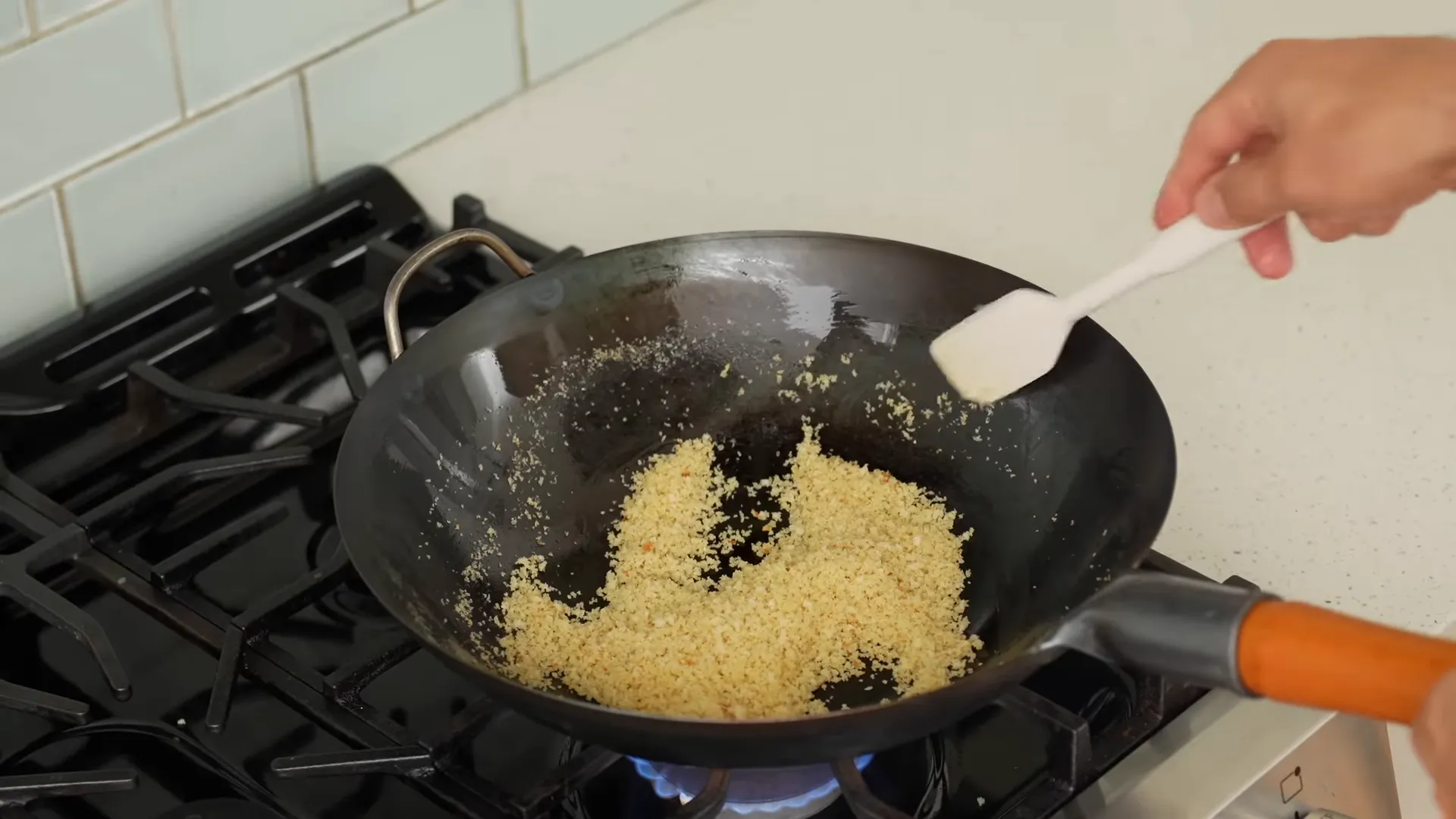
Toasting panko breadcrumbs in the wok until golden

Ingredients

  • 30g olive oil
  • 100g panko breadcrumbs
  • 15g sliced garlic (5–6 cloves)
  • 30g finely diced red onion or shallot
  • 15g chopped anchovy fillets (5–6)
  • pinch salt & big pinch chili flake
  • 350g water
  • 1 block instant ramen
  • 20g unsalted butter
  • 10g finely grated Parmesan (+ extra to serve)
  • fresh cracked black pepper

Method

  1. Heat oil in a wide pan. Add panko and stir constantly until deep golden, ~2–3 minutes. Drain onto paper towel—extra panko stores airtight for weeks.
  2. Wipe the pan, add a splash of oil, then garlic, onion and anchovy with a pinch of salt. Sauté until onion softens and anchovies melt into the oil, ~2 minutes. Add chili flake and fry 30 seconds.
  3. Add 350g water, bring to boil. Drop in ramen block, cook 1 minute, flip like a book, then cook ~3 minutes until most liquid is absorbed and noodles are al dente.
  4. Turn off heat, add butter and stir vigorously to release starches—this emulsifies the sauce. If it tightens too much, splash a spoon of water. Stir in Parmesan until glossy.
  5. Serve topped with toasted panko, extra Parmesan and a heavy grind of black pepper.

Tip: anchovies don’t make this taste fishy—they melt into warm umami notes. Ramen as pasta is shockingly excellent here: bouncy, quick, and thirsty for sauce.

Step 3: Spicy Chilled Korean Noodles (Bibim Guksu‑Style)

Bright, spicy, cold—this version is fantastic for hot nights or when you want something visually striking with minimal effort. It’s one of the easiest and most rewarding recipes in this set of cooking recipes, healthy foods options.
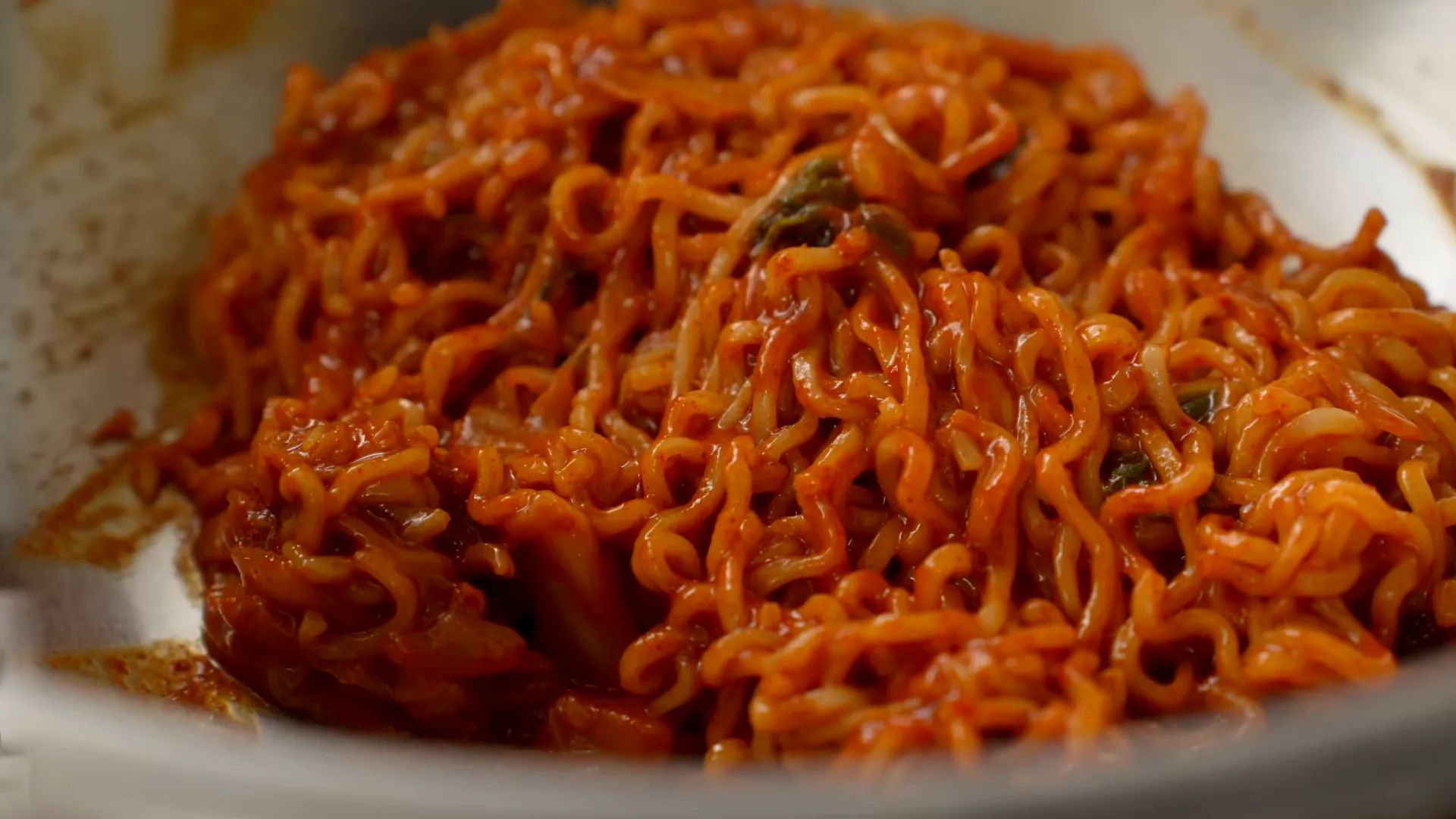
Mixing chilled ramen with gochujang-kimchi sauce for bibim guksu

Ingredients

  • 1 block instant ramen (or 100g any thin noodle)
  • 20g gochujang
  • 15g soy sauce
  • 5g sesame oil
  • 5g rice vinegar
  • 10g honey
  • 10g kimchi juice
  • 5g gochugaru or sweet paprika
  • 50g well‑fermented kimchi, julienned
  • 40g julienned cucumber (or pear/apple/bell pepper)
  • 15g thin scallion bias slices
  • crispy seaweed & untoasted sesame seeds to finish

Method

  1. Boil ramen 4–5 minutes until tender. Drain and rinse immediately under cold water to stop cooking, then blot on paper towels until nearly matte.
  2. Whisk gochujang, soy, sesame oil, rice vinegar, honey, kimchi juice and gochugaru until smooth. Add julienned kimchi to the sauce.
  3. Toss the chilled noodles with the sauce until every strand is coated. Mound into a bowl and top with julienned cucumber, scallions, crispy seaweed and sesame seeds. Eat cold.

Why it hits: the combination of gochujang heat, kimchi funk, and crisp cucumber is explosive for so little effort—exactly the type of low‑work/high‑flavor dish that proves pantry cooking recipes, healthy foods can still be stunning.

Try these variations and pantry swaps

  • Out of anchovies? Use rinsed chopped capers in the anchovy recipe.
  • No fresh garlic/ginger? Tubed pastes work fine and stay in the fridge for ages.
  • Sub thin spaghetti or somen for ramen in the chilled noodle bowl.

These three recipes are built around speed, pantry staples and small technique wins. They’re designed to be the workhorse dinners you reach for when you’ve got nothing but a block of ramen and the will to eat well. Try one tonight—your future self will thank you.

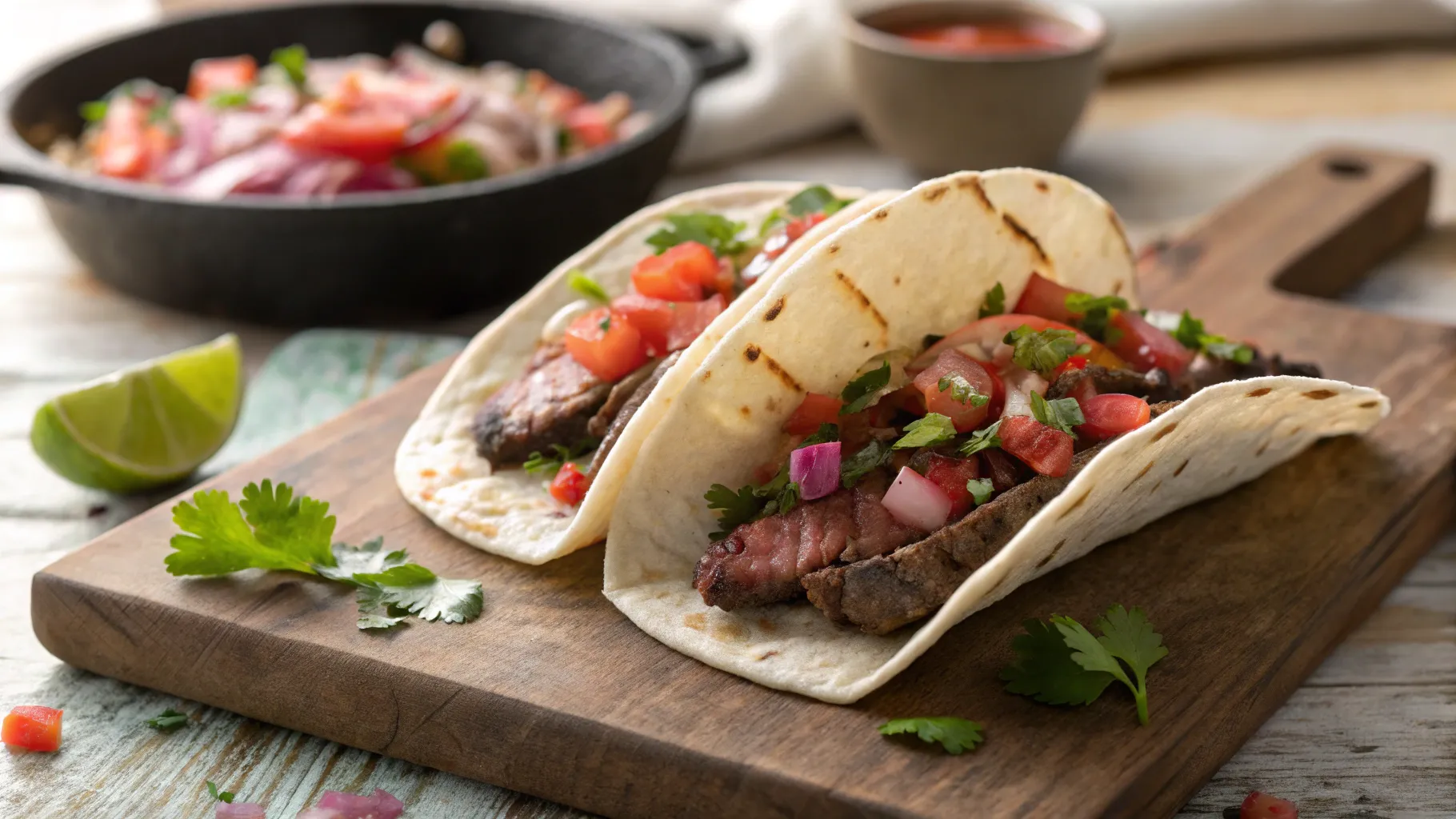
Shockingly Fast Noodle Dishes for Hungry Boys — cooking recipes, healthy foods

In my video I show three ways to turn a 20‑cent block of instant ramen into weeknight dinner gold. These cooking recipes, healthy foods ha...

Thursday, September 4, 2025

Featured

From my video, this step-by-step guide shows how to make taco-truck-style carne asada tacos that are tender, bright, and ridiculously satisfying. I walk through everything: the secret to melt-in-your-mouth skirt steak, an elevated pico de gallo trick, and how to make fresh, floppy flour tortillas—with methods that work for total beginners. If you like practical cooking tips and approachable cooking recipes, healthy foods, this is for you.

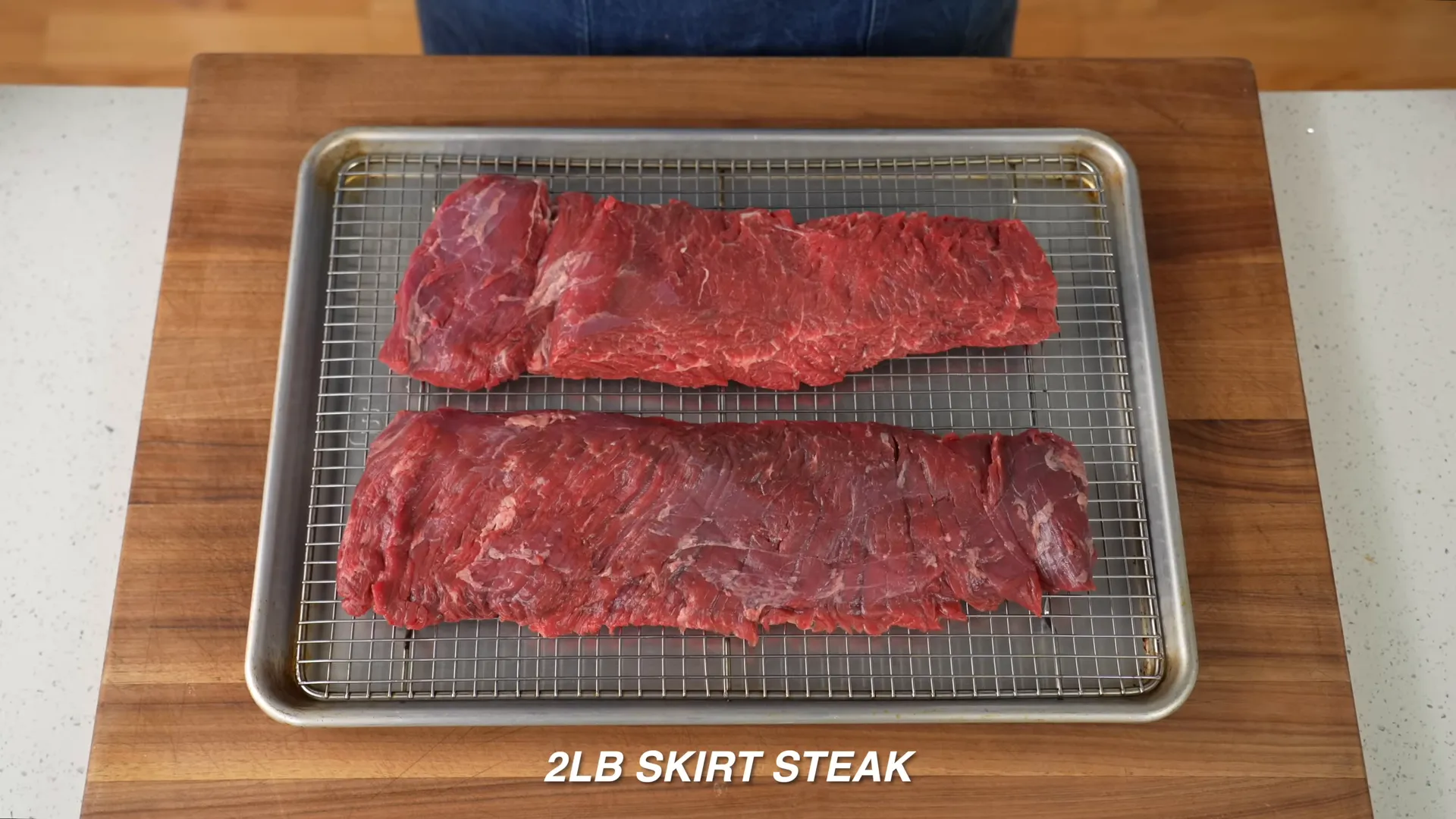
Two pounds of skirt steak on a cutting board, about an inch thick

Step 1: Choose and prep the steak

Start with 2 lb (907 g) skirt steak. I prefer skirt because it’s naturally about an inch thick and cooks quickly to medium while you get a great char. If you can’t find skirt, flank is the second-best option.

  • Jaccard the steak 10–12 times to break down muscle fibers and let the marinade penetrate. No jaccard? Use a sharp fork and poke 30–40 times.
  • Cut each skirt steak into four pieces (about 6–8 oz each). Smaller pieces make even searing and easier handling on the grill.
  • Generously season both sides with kosher salt and rest for 15 minutes (dry brine).

Step 2: Make the carne asada marinade

This marinade is a balanced punch of citrus, smoke, heat, and aromatics—blended into a paste so it clings to the meat instead of washing off.

  • 75 g (1/3 cup) neutral oil
  • 15 g (1 Tbsp) soy sauce
  • 2 chipotle chiles in adobo (≈25 g)
  • 25 g (4–5 cloves) garlic, minced
  • 5 g dried oregano
  • 5 g ground coriander
  • 15 g smoked paprika
  • 5 g ground cumin
  • 6–7 g Mexican bouillon powder (or a spoonful Better Than Bouillon)
  • 10 g ground black pepper
  • 25 g chopped cilantro
  • 60 g fresh lime juice (≈1.5–2 limes)
  • 150 g fresh orange juice (≈2 oranges)

Blend on high 20–30 seconds until smooth. If you don’t have a blender, mince and grate the components finely and whisk together—the flavor will be the same even if the texture differs.

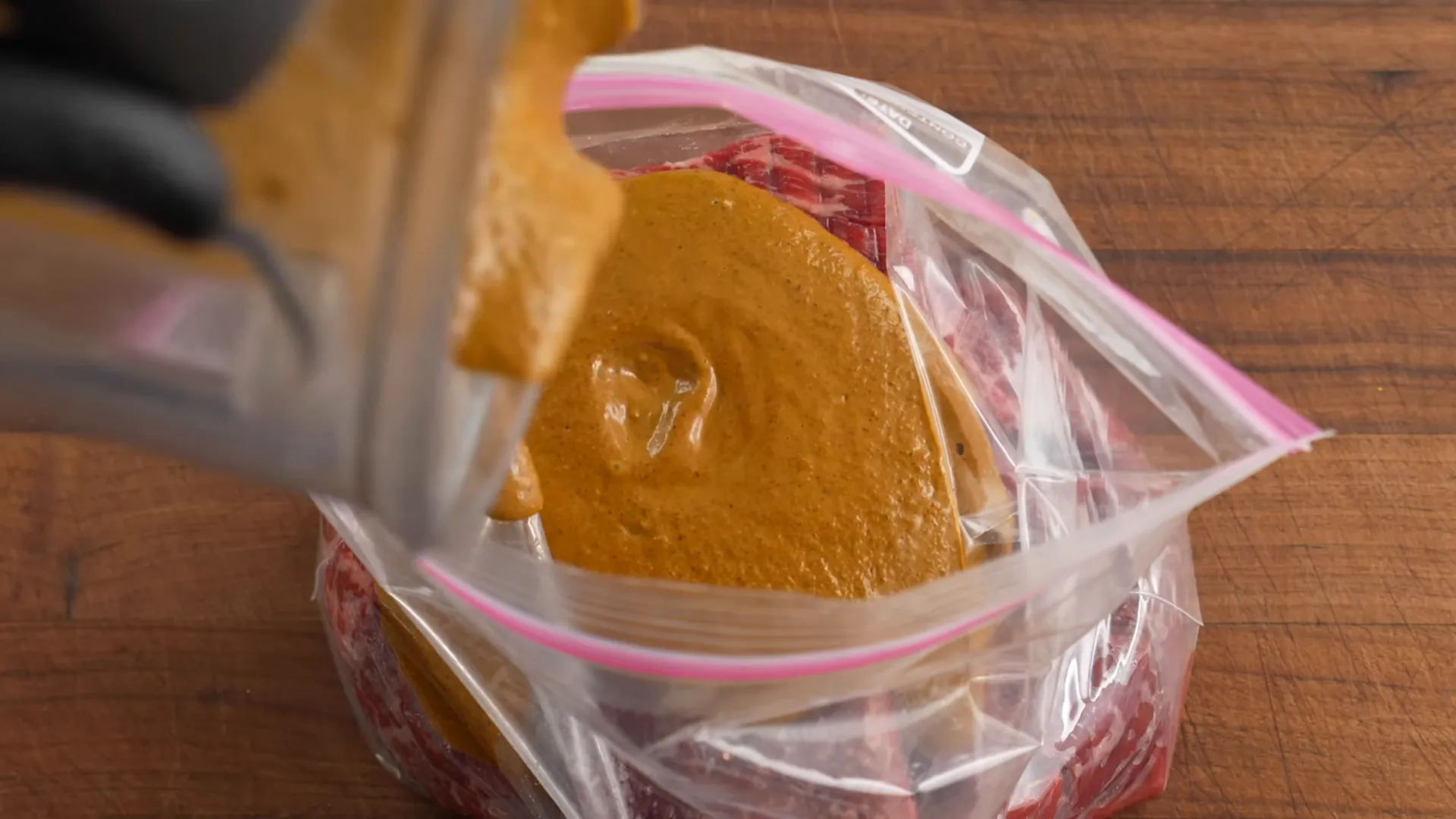
Skirt steaks in a zip-top bag being coated in bright reddish-orange marinade

Step 3: Marinate

  1. Place the salted steaks in a zip-top bag, pour the marinade in, and massage to coat thoroughly.
  2. Chill overnight for best results—this makes the steak roughly 30% better in taste and texture—but if you’re short on time, 2 hours or same-day marinating still works.

Overnight marination lets citrus, smoke, and aromatics settle into the meat and helps the jaccarded holes soak deeper.

Step 4: Make elevated pico de gallo

Pico is more than diced tomato. Curate the tomato flesh, pull out excess liquid, and treat the mixture like a quick tomato-lime marinade.

  • 300 g diced ripe tomato flesh (discard pith and jelly—use extra tomatoes if needed)
  • 150 g white onion, small-diced and rinsed under cold water to remove bite
  • 30 g finely diced jalapeño (or poblano for milder, serrano for hotter)
  • 15 g finely chopped cilantro
  • 30 g lime juice (≈1 lime)
  • 8 g kosher salt

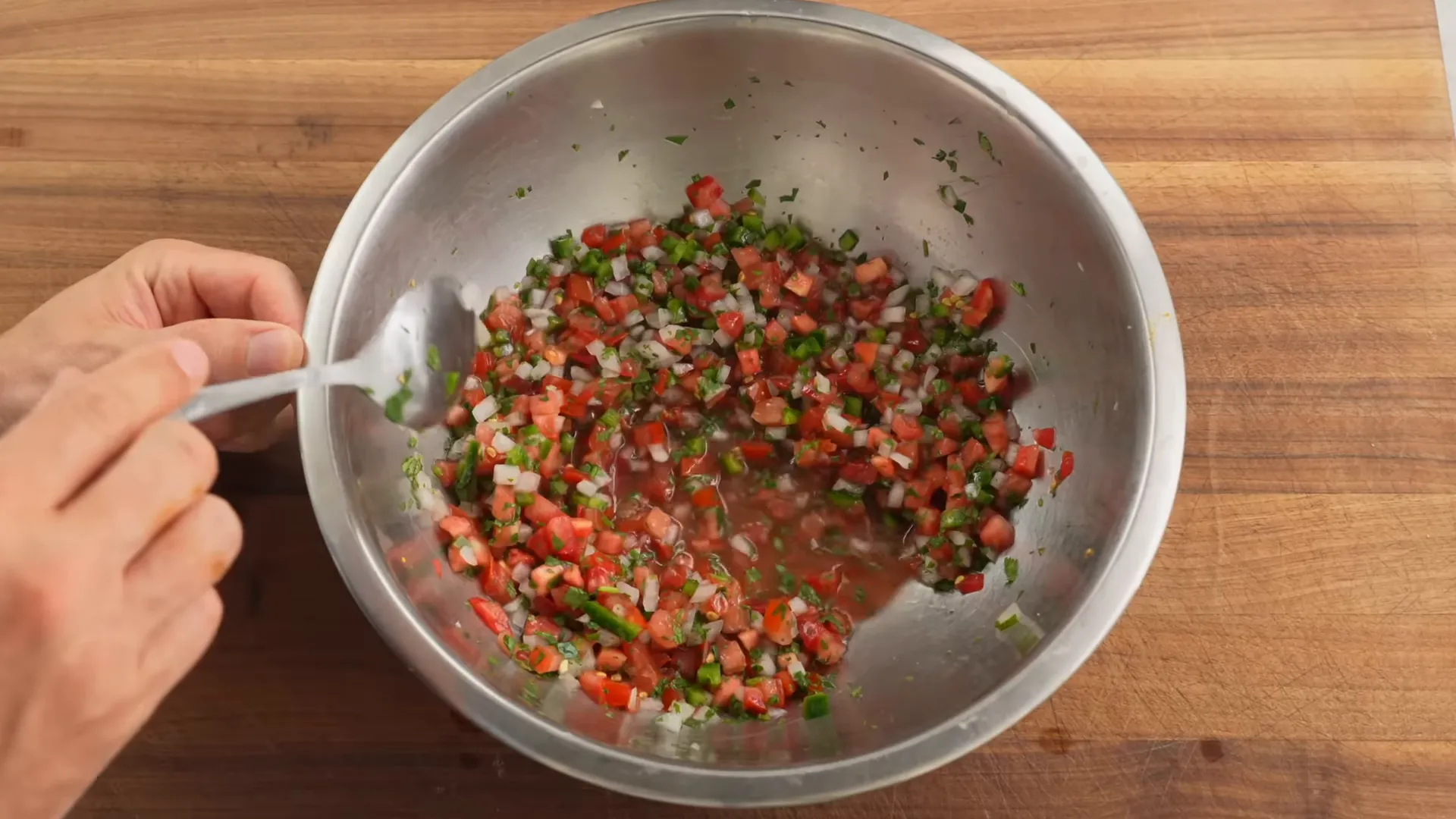
Scoop the tomatoes into a strainer to remove excess tomato water before combining. Mix everything and let sit 20 minutes—the salt draws juices that the veg will reabsorb, concentrating flavor instead of diluting it.

Fresh pico de gallo in a bowl with bright tomato juices

Step 5: Make super-floppy flour tortillas

These homemade flour tortillas are quick, soft, and floppy—made without special equipment if needed.

  • 300 g (2 ½ cups) all-purpose flour
  • 6 g (1 tsp) kosher salt
  • 50 g (3.5 Tbsp) cold unsalted butter, cubed
  • 170 g (¾ cup) cold water

Food processor method:

  1. Pulse flour, salt, and butter until pea-sized flecks form.
  2. With the processor running, stream in cold water until the dough forms a loose blob.
  3. Turn out and knead 1–2 minutes until the dough can hold together when tugged.
  4. Divide into 12 × 40 g balls, cover briefly (5 minutes), then roll to ~7" rounds.
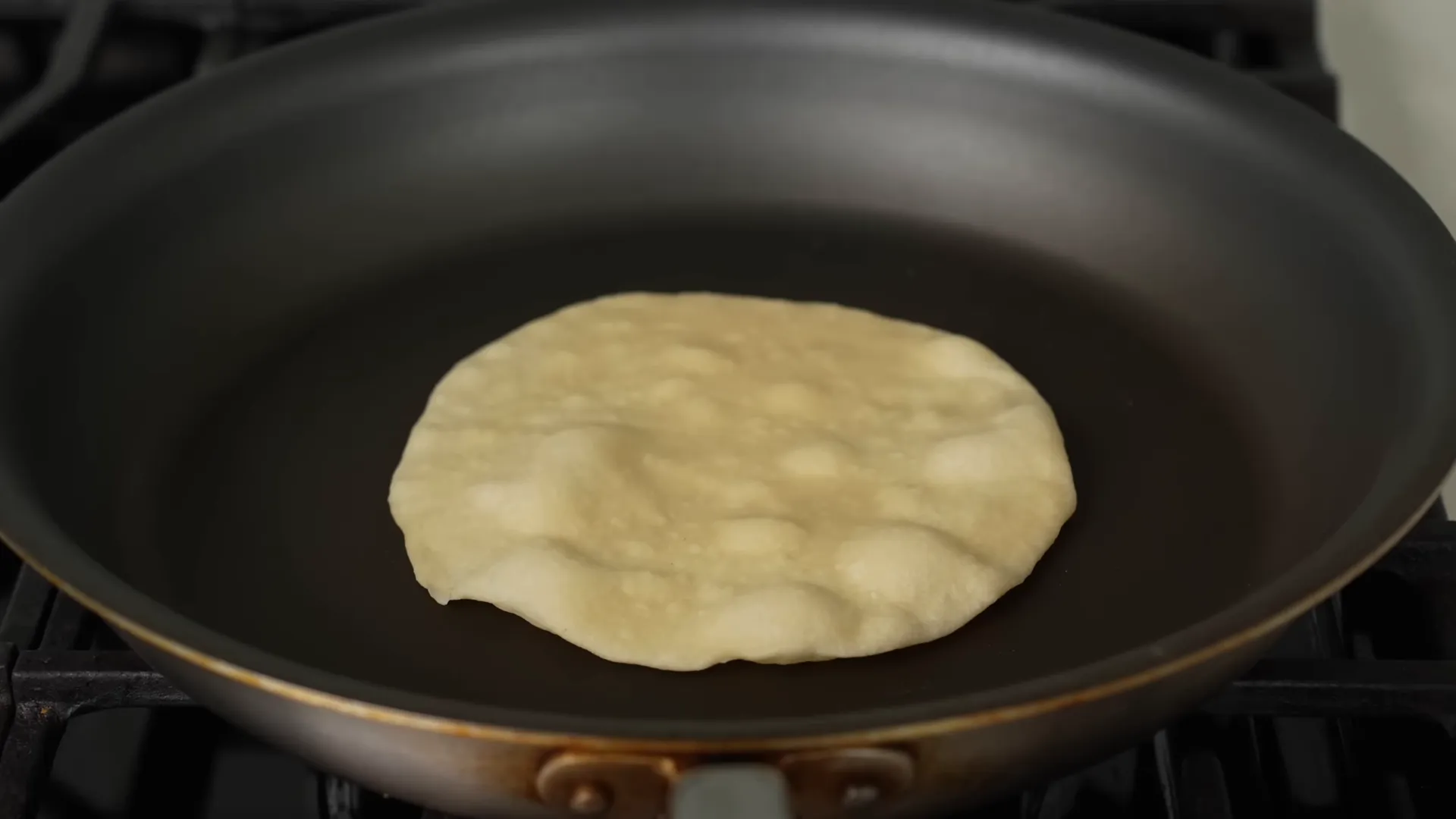
  5. Cook in a medium-heat nonstick pan: ~90 seconds first side until bubbles form, flip 30 seconds more. Keep warm in a tortilla warmer.

No food processor? Grate the cold butter into flour and mix by hand the same way; it works fine.

Fresh tortilla puffing on a pan and developing bubbles

Step 6: Grill the carne asada

High heat is the game here. Oil your grates thoroughly—marinated meat loves to stick, so be generous with spray or oil.

  1. Preheat grill to high. If using a small grill that struggles to get hot, be mindful but still aim for high heat.
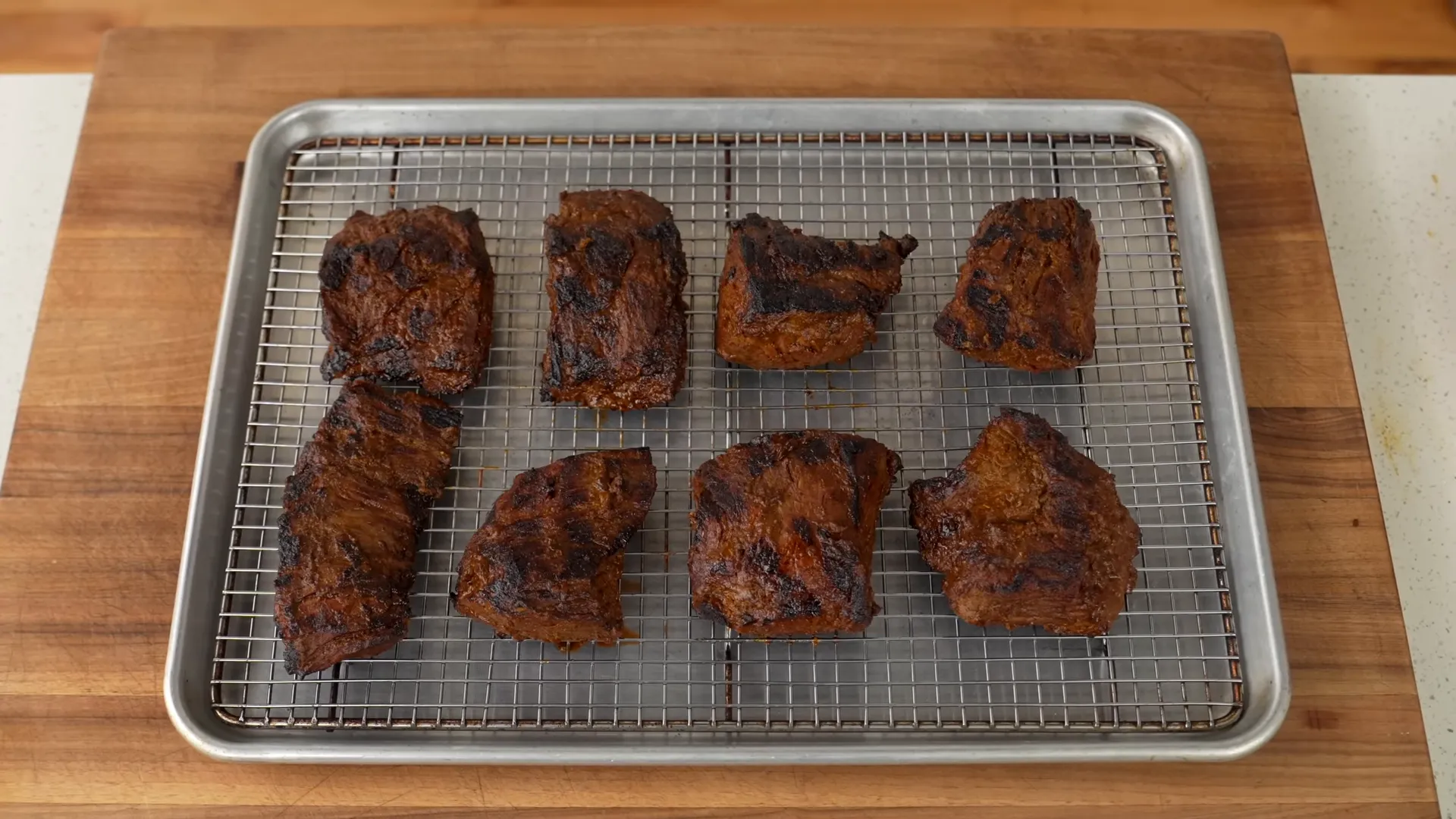
  2. Grill steaks 3–4 minutes per side until deeply charred and the marinade has turned into a lacquer on the surface.
  3. Internal target: roughly 130–140°F (54–60°C) for skirt—this gives a juicy, meaty result. Rare skirt is often chewy; a bit more internal heat unlocks better flavor.
  4. Rest steaks 5–10 minutes, then slice against the grain and dice into ½" cubes.
Grilled skirt steak with dark char marks ready to rest

Step 7: Assemble and serve

  1. Rewarm tortillas and spread a dollop of mashed avocado (seasoned with lime & salt) on each.
  2. Top with 3–4 oz of diced steak.
  3. Drain excess liquid from pico and spoon a generous dollop on top.
  4. Fold and eat immediately—these are best hot and fresh.

One bite = fresh, clean flavors: citrus brightness from the orange and lime, a gentle heat from chipotles and jalapeño, smoky depth from paprika and grill char, and the creamy foil of avocado in a sweet, floppy tortilla.

Why this works

  • Jaccarding physically breaks muscle fibers so the meat feels tender, and it lets the marinade reach deep into the steak.
  • Blended marinade sticks to the steak and forms a lacquer as it grills—more flavor and less flare-ups than thin, watery marinades.
  • Curated pico (discarding pith & jelly, draining tomato water) keeps the salsa bright and concentrated instead of soggy.
  • Fresh tortillas change the taco game—soft, warm, and slightly sweet compared to store-bought.

These tacos are one of those simple cooking recipes, healthy foods combos that feel summery and enormous in flavor without being fussy. Try making them for a weekend cookout—the reward is immediate.

Final thoughts

If you follow these steps—jaccard, marinate overnight, curate your pico, and make fresh tortillas—you’ll end up with tacos that outshine most taco-truck attempts. I wouldn’t change a single thing about this method: the steak is tender, juicy, and perfectly seasoned; the pico is bright; and the tortillas are the finishing touch that brings it all together. Go fire up the grill and enjoy.

The Best Steak Tacos You'll Ever Make — cooking recipes, healthy foods

From my video , this step-by-step guide shows how to make taco-truck-style carne asada tacos that are tender, bright, and ridiculously sat...
Featured

In my original video I show five fast, craveable weeknight ideas to turn a pack of boring chicken thighs into something memorable. These cooking recipes, healthy foods are all tested for flavor and speed — each comes together in about 30 minutes and uses small, smart shortcuts so you can cook less and eat better.

Below you'll find step-by-step instructions, ingredient lists, timing tips, and a few substitutions that make these recipes realistic for busy evenings. Use the screenshots to help you visualize key moments.

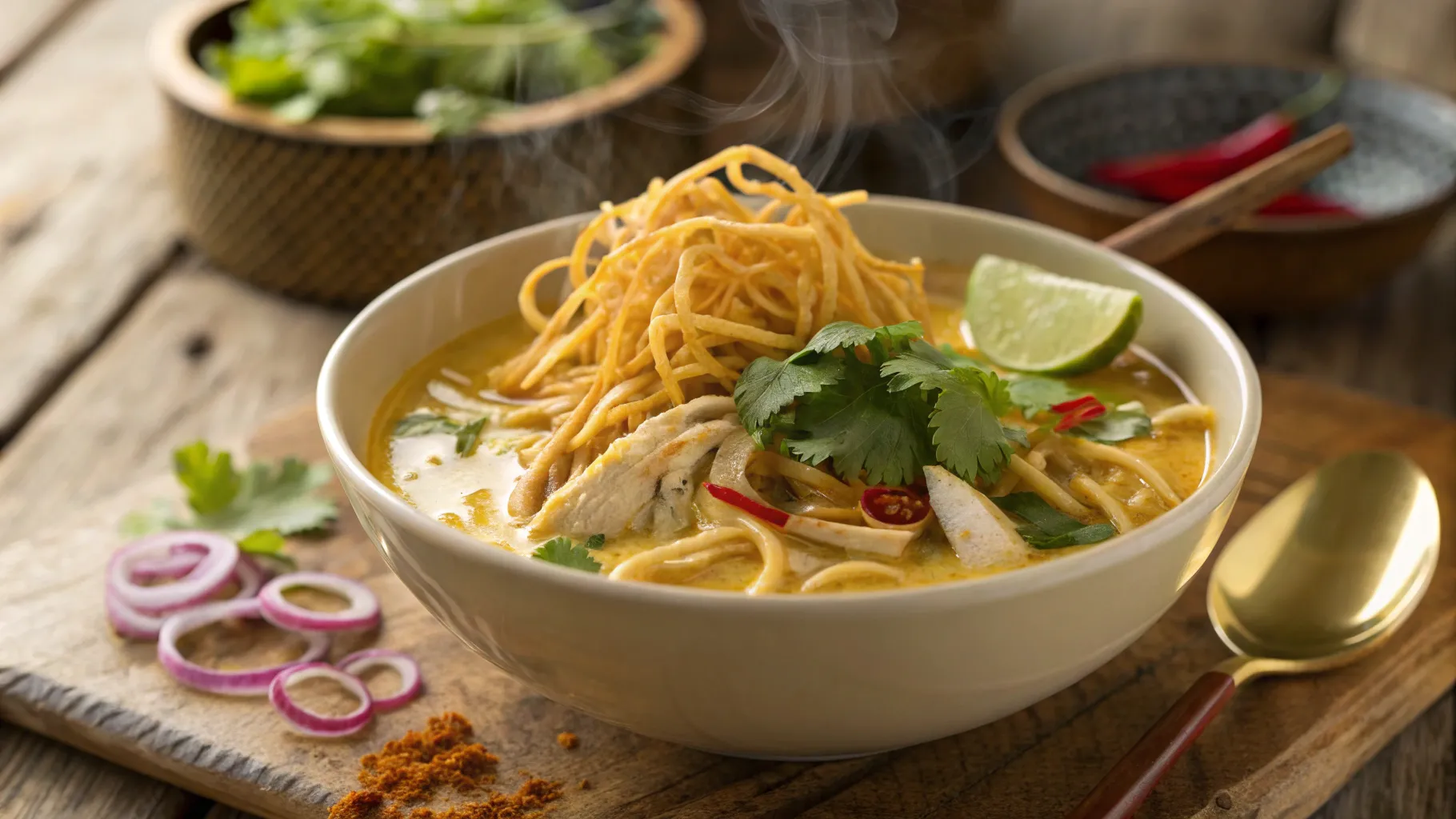
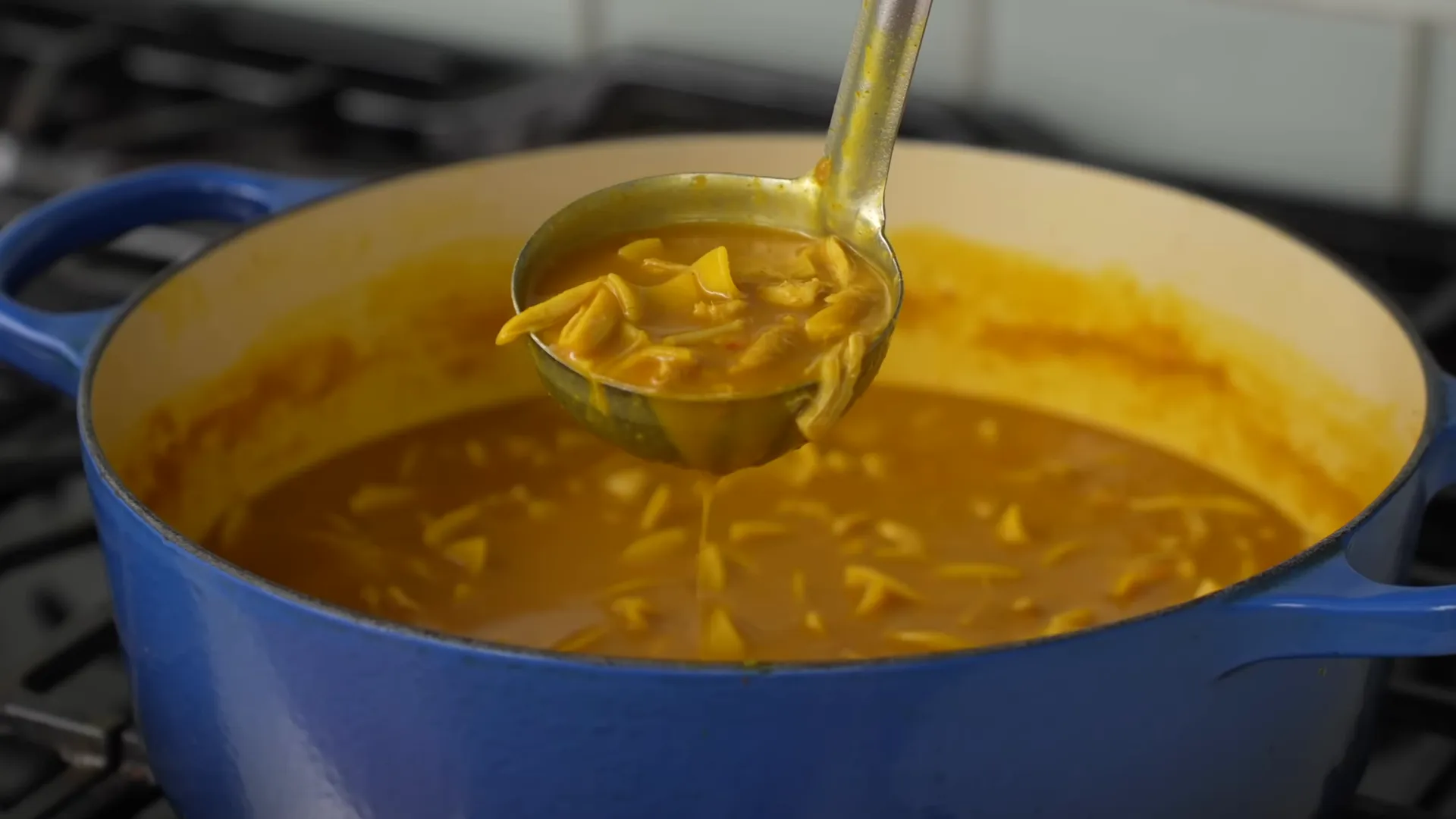
Shredded chicken returned to the rich coconut broth

Step 1: Weeknight Khao Soi (Thai-style coconut chicken noodle soup)

This is a shortcut take on northern Thai khao soi — silky coconut broth, shredded simmered thighs, and soft egg noodles. A perfect one-pot weeknight comfort bowl.

Ingredients (serves 2–3)

  • 4 boneless, skinless chicken thighs (lightly salted)
  • 10g curry powder, 10g turmeric, 5g paprika, 3g coriander, 5g salt
  • 30g garlic paste, 30g ginger paste, 15g lemongrass paste (or fresh substitutes)
  • Zest of 1 lime
  • 1 tbsp coconut oil, 500g chicken stock, 3 cans full-fat coconut milk
  • 30g fish sauce, 20g brown sugar, 15–25g sambal
  • 175g dry egg noodles (egg jiu / dumpling noodles)
  • To finish: fried wonton strips, shaved red onion, cilantro, pickled mustard greens or sauerkraut
  1. Salt the thighs on both sides and let them rest while you make the paste.
  2. Mix spices, pastes and lime zest into a paste. Fry in oil over medium-high for 2–3 minutes to remove raw edges.
  3. Add stock, coconut milk, fish sauce, sugar and sambal. Bring to a simmer and nestle the thighs in. Simmer 10 minutes.
  4. Add noodles, cover and cook 8–10 minutes. Remove thighs, shred and chop to spoon-sized pieces, return to pot.
  5. Thin broth with a splash of stock if it’s too thick from noodles. Serve with wonton strips, onion, cilantro and pickles.

Tip: tube pastes keep weeknight life easy; if using raw applications, opt for fresh garlic/ginger instead.

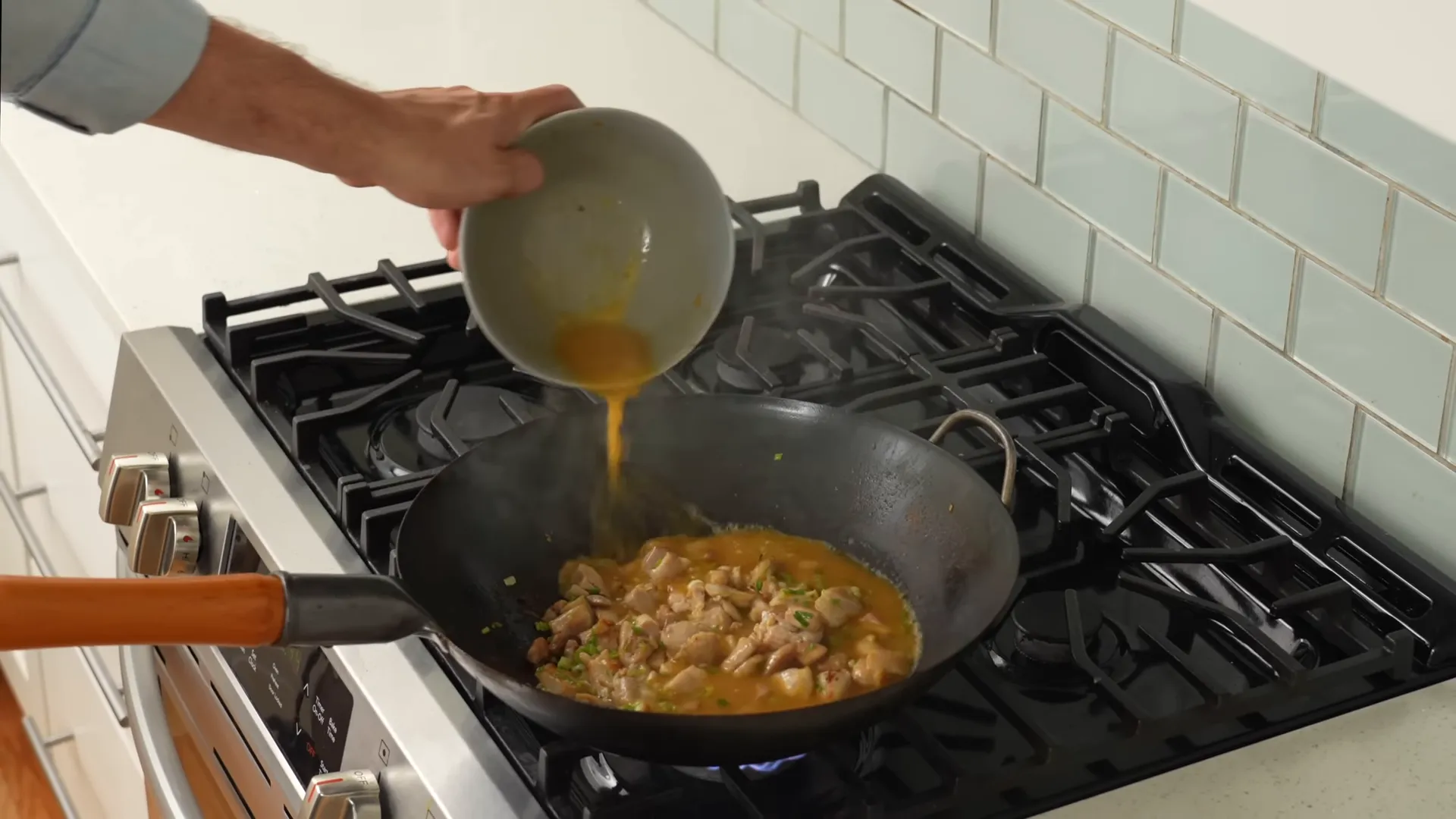
Pouring orange sauce around the perimeter of the hot wok

Step 2: Fast Orange Chicken & Broccoli

A lighter take on takeout orange chicken — sticky, floral, and bright without the deep-fry heaviness.

Ingredients (serves 2–3)

  • 450g chicken thighs, cut into 1" pieces; salt
  • 250g broccoli, cut into 1½" florets
  • Sauce: 125g chicken stock, 50g soy sauce, 10g sesame oil, 75g mirin, 50g sugar
  • 15g garlic paste, 15g ginger paste, zest of 1 orange, 75–85g orange juice, 25g rice vinegar, 10g cornstarch
  • 75g sliced scallions, sesame seeds and steamed rice to serve
  1. Stir-fry broccoli over very high heat with oil and salt for about 2 minutes; remove.
  2. Stir-fry salted chicken pieces 4–5 minutes until nicely colored.
  3. Add scallions for 60 seconds, then pour the sauce around the hot wok edge so it caramelizes.
  4. Boil until the sauce thickens and reduces ~25%, toss broccoli back in, coat and serve over rice with sesame seeds.

Quick wins: high heat = juicy thighs; zest + orange juice gives that floral orange lift without cloying sweetness.

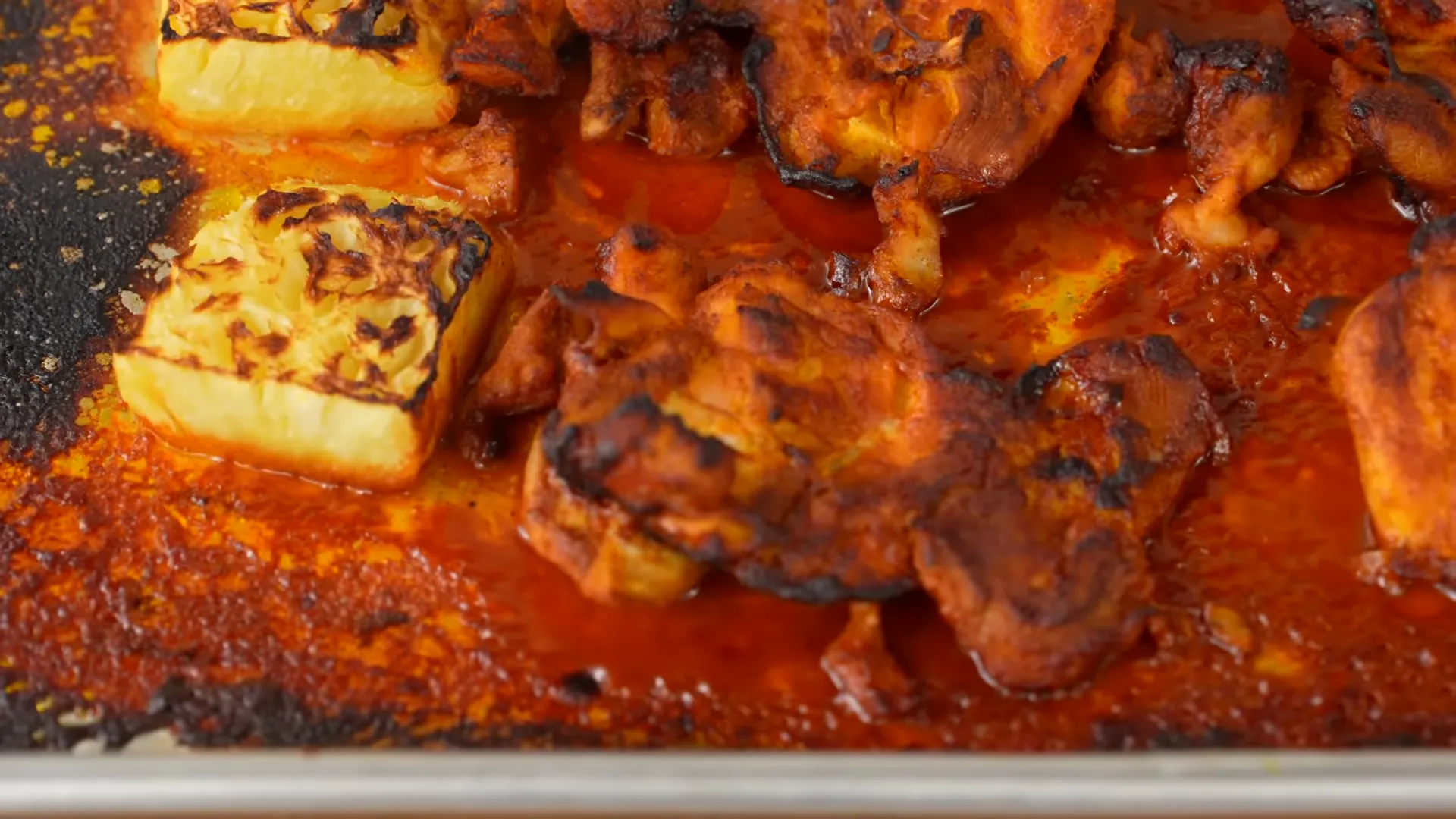
Broiled Al Pastor thighs with roasted pineapple on the sheet tray

Step 3: Chicken Thigh Al Pastor Tacos

Al pastor flavor in under 30 minutes — broiled thighs glazed with achiote, orange and pineapple, chopped small for tacos that don’t fall apart.

Ingredients (serves 4)

  • 900g chicken thighs
  • Marinade: 50g pineapple, 100g orange juice, 10g chili powder, 2g oregano, 5g cumin, 5g garlic powder
  • 30g achiote paste, 25g white vinegar, 20g sugar, 20g salt
  • Fresh pineapple planks, corn tortillas, chopped onion, cilantro, tomatillo salsa
  1. Blend the marinade until smooth and toss the chicken to coat. Marinate briefly or up to overnight.
  2. Arrange thighs and pineapple on a foil-lined sheet tray and broil 5–8 minutes per side until glazed and charred (rotate for even browning).
  3. Chop chicken and pineapple to ½" pieces (small dice keeps tacos tidy). Optionally toss with pan drippings.
  4. Serve on double corn tortillas with onion, cilantro and salsa.

Substitute: no achiote? Two chipotles in adobo work in a pinch. These tacos are smoky, sweet and addictive — chicken is an S-tier carrier for al pastor.

Step 4: Chicken Souvlaki Pita with Tzatziki

Grilled, mustard-forward suvlaki that’s exactly the kind of relaxed, satisfying weeknight dinner you want after a long day — cooling tzatziki and fresh pico finish it off.

Ingredients (serves 4)

  • 900g chicken thighs, cut into 1.5–2" chunks
  • Marinade: 125g olive oil, 15g salt, 30g garlic, 5g oregano, 5g black pepper, 100g Dijon, zest of 2 lemons + juice of 1
  • Tzatziki: 150g grated & squeezed cucumber, 200g Greek yogurt, 75g mayo, 1 garlic clove, 5g salt, 5g dill, 15–20g lemon juice
  • Pitas, pico or chopped tomato/cucumber mix, pepperoncinis
  1. Toss chicken in the marinade, skewer and grill over high heat 12–15 minutes, rotating every ~2 minutes, or broil if needed.
  2. Chop grilled chicken to ~½" pieces, pile into warm pita, add generous tzatziki and fresh pico, top with pepperoncinis.

Grill marks + Dijon mustard = comfort without heaviness. This one feels indulgent yet genuinely balanced — perfect after work.

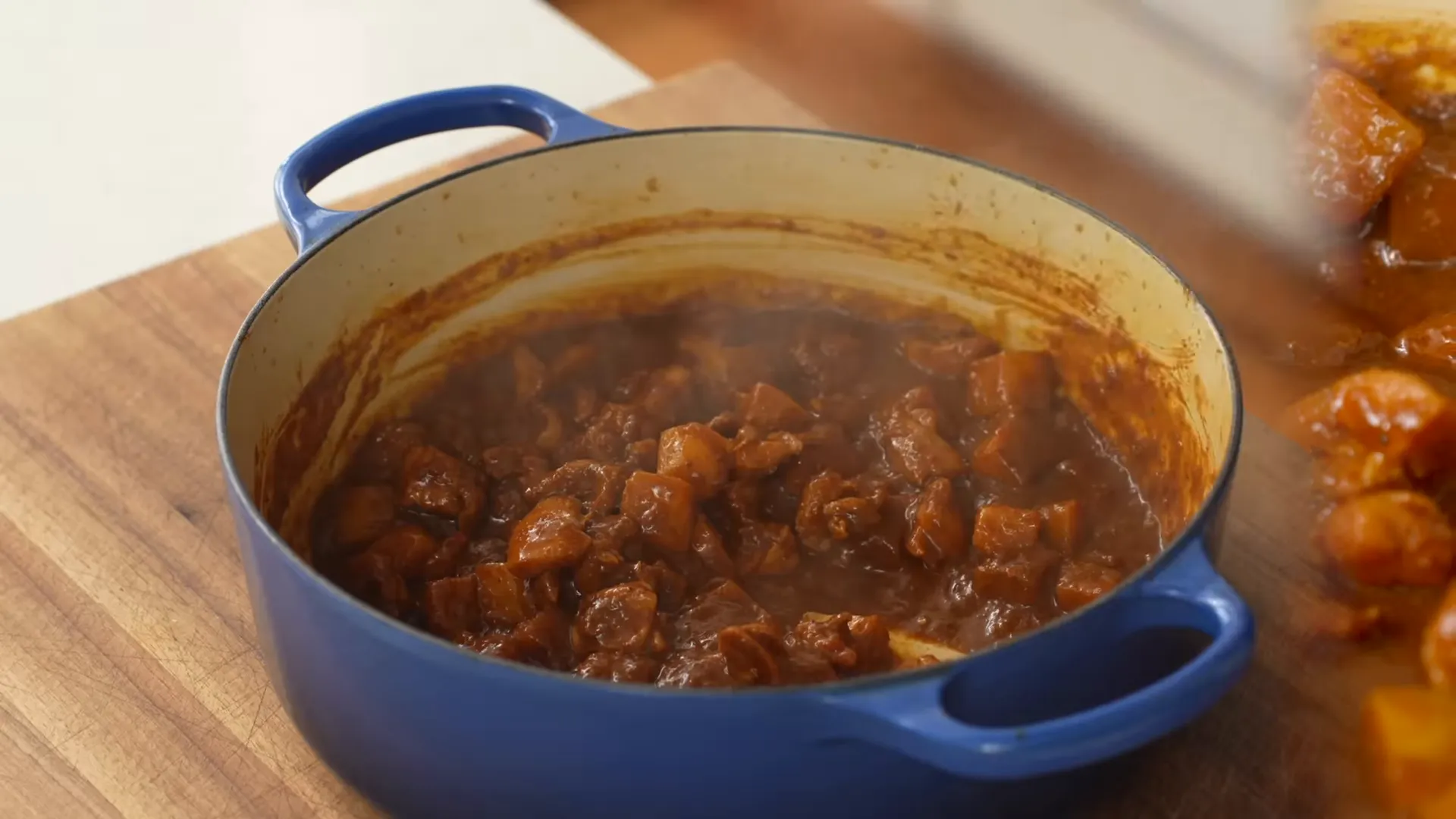
Vindaloo simmering with potatoes and chicken

Step 5: Chicken Aloo Vindaloo (quick homestyle version)

Rich, spiced, and seriously satisfying — this vindaloo leans on onion caramelization and a concentrated, reduced gravy. Serve over basmati with a yogurt drizzle.

Ingredients (serves 2–3)

  • 450g chicken thighs, cut 1.5"; 2 Yukon gold potatoes, 1" dice
  • 1 large onion (grated & drained), ¼ cup oil, 20g garlic paste, 20g ginger paste, 50g tomato paste
  • 10g garam masala, 5g cumin, 10g curry powder, 10g paprika, 2g chili flakes (optional)
  • 750g chicken stock, 5g salt; basmati rice, yogurt and cilantro to serve
  1. Sauté grated onion in oil without salt until caramelized (~5 minutes).
  2. Add garlic, ginger and tomato paste; cook 2 minutes. Stir in spices for 60 seconds.
  3. Add stock, bring to a hard boil, then add salted chicken and potatoes. Simmer uncovered 15–18 minutes until potatoes are tender and sauce has reduced.
  4. Thin with a splash of stock if gravy becomes too glued. Serve over basmati with thinned Greek yogurt and cilantro.

Technique note: draining onion water before browning makes a huge difference — you need caramelization for depth.

Final thoughts & next steps

These five cooking recipes, healthy foods cover a wide flavor map — Thai coconut, citrus-glazed stir-fry, Mexican al pastor, Greek suvlaki and a punchy vindaloo — and each is built for weeknights. Use tube pastes to save time, keep your cuts uniform for even cooking, and don’t be afraid to broil or grill for big flavor quickly.

If you like small conveniences, I recommend stocking a tube of ginger/garlic paste, a jar of achiote, and a pack of egg jiu noodles — they turn busy nights into reliably great dinners.

One more plug: if you’re chopping a lot, a good chef’s knife changes everything. I use my 8" chef’s knife and recommend getting one that feels right in your hand.

Make one tonight — or work your way through all five over the week. These cooking recipes, healthy foods will keep dinner interesting without turning the stove into a second job.

My 5 Best Weeknight Chicken Recipes — cooking recipes, healthy foods

In my original video I show five fast, craveable weeknight ideas to turn a pack of boring chicken thighs into something memorable. These c...
Featured

Key takeaways

  • I teach a few restaurant tricks (jacquarding, baking soda in the marinade, and a craggy dry mix) that lock in tenderness and maximize crunch.
  • Potato starch + a thin batter + small “craggy” bits = the clingiest, longest-lasting crunch you can get at home.
  • The sauce is bright, sticky, and balanced—simmer it until it leaves a trail, then toss fried chicken for just a few seconds so some pieces stay crisp.

I made a video showing every step to turn ordinary chicken into impossibly crunchy takeout-style General Tso’s. If you like bold, practical cooking recipes, healthy foods tips and want to reproduce restaurant results at home, this write-up walks through the entire process—from prep to plate—so you can nail it on the first try.

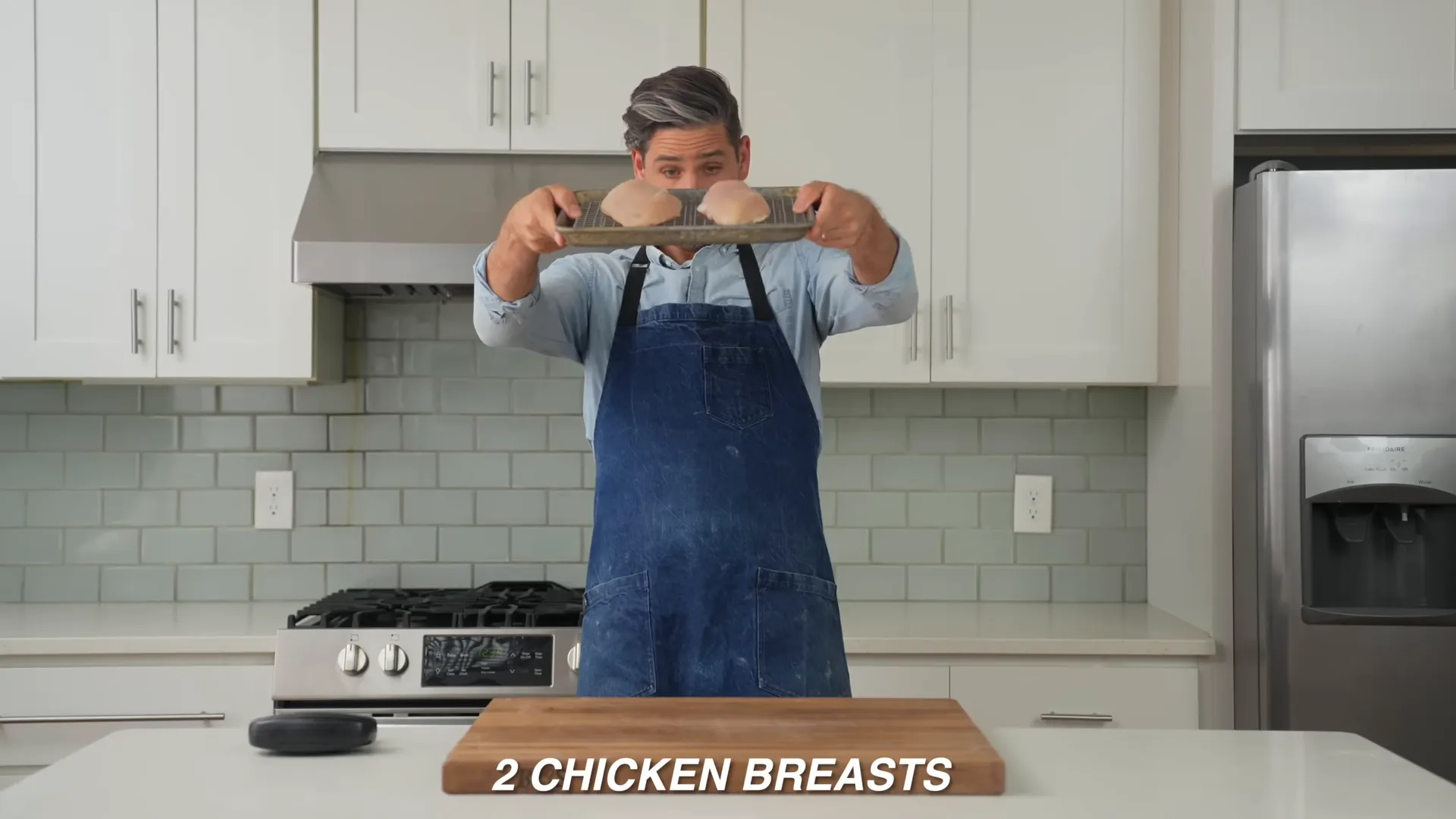
Two chicken breasts on cutting board being prepped

Step 1: Prep the chicken (why smaller, why the jaccard)

Start with 1 lb (≈450 g) boneless skinless chicken breast (thighs can work, but breasts are easier to cut evenly and—surprisingly—hold breading better here). I jab each breast about 10 times per side with a jaccard. No jaccard? Use a sharp fork and pierce 20–30 times per side.

This mechanical tenderizing breaks fibers, reduces contraction at high heat, and keeps the meat juicier. Slice each breast into 3–4 long strips, then cut those into ~3/4" cubes—smaller pieces increase surface area for breading and will grow about 50% during the process.

Marinade (mix and rest)

  • 30 g soy sauce
  • 30 g mirin
  • 2 g MSG (optional)
  • 2 g baking soda
  • 30 g potato starch (or cornstarch)

Mix the chicken and marinade thoroughly and rest for 20 minutes. The baking soda raises pH and inhibits protein tightening, which is why lean breast stays tender and juicy.

Close-up of craggy dry mix texture

Step 2: Make the dredge, batter, and craggy bits

The secret here is texture layering. You need a thin batter that glues to the meat, plus a dry mix that contains thousands of tiny, partially hydrated pebbles—the “crags”—that fry into long-lasting crunch.

Dry mix

  • 350 g all-purpose flour
  • 10 g baking powder
  • 8 g garlic powder
  • 20 g salt
  • 350 g potato starch (my secret weapon)

Potato starch fries ultra-crispy, absorbs less oil than flour, and browns slower so the coating dehydrates better—perfect for Asian-style fried chicken.

Batter (adhesion base)

  • 250 g of the dry mix
  • 300 g water

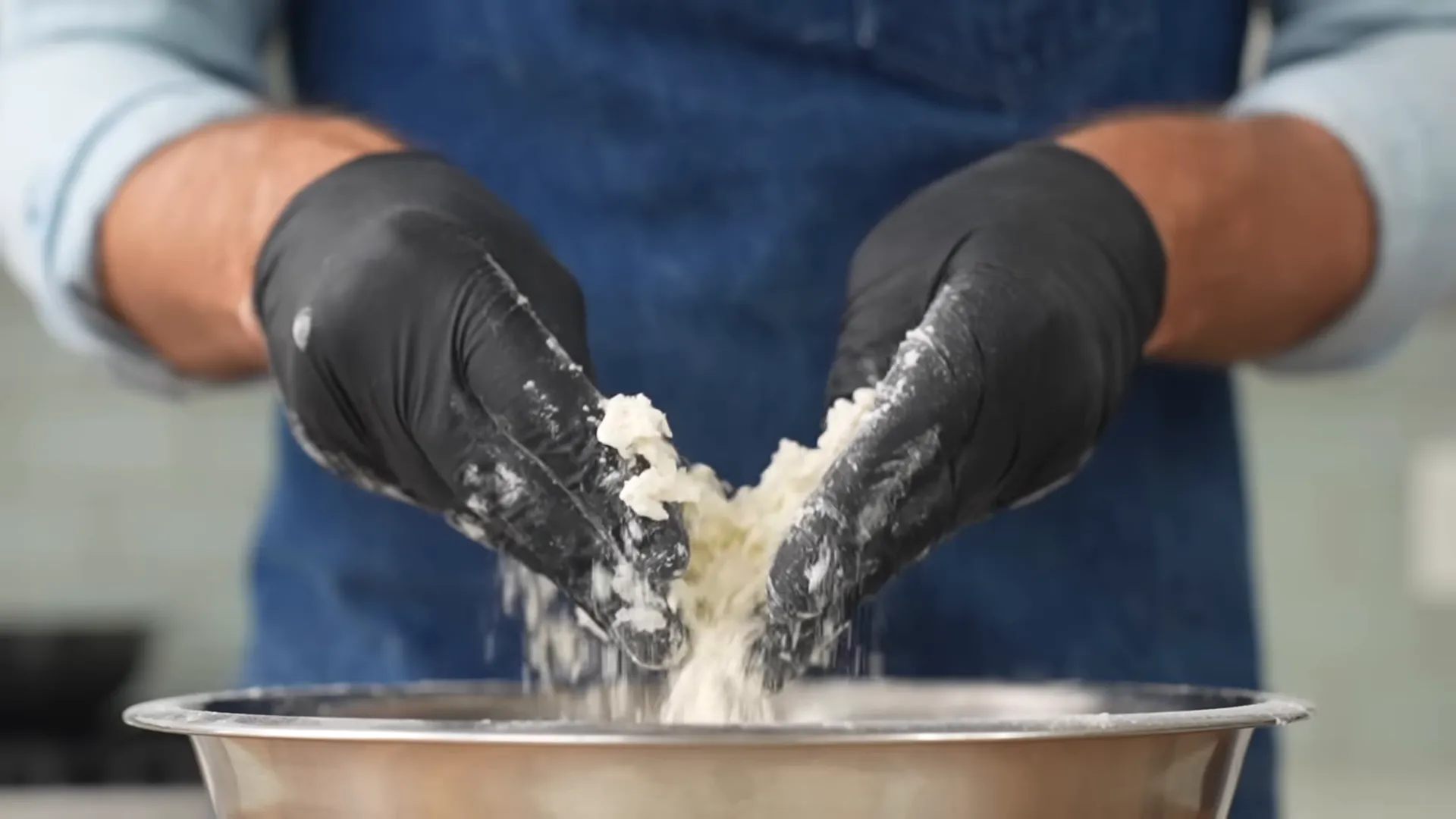
Stir to a thin pancake-batter consistency. Then pour 200 g of that batter into the remaining dry mix and use your hands to crumble until you’ve got rice-to-lentil sized pebbles spread across a powdery background. These craggy bits are the crunch makers—don’t skip or skimp.

Step 3: Bread the chicken (build layers, rest)

  1. Gently toss about a third of the marinated chicken in the batter—be gentle so you don’t scrub off the marinade.
  2. Let excess drip, then drop the pieces into the craggy dry mix. Lift/tumble from the bottom to form a base layer.
  3. Grab each piece and shower with extra craggy bits while giving a soft squeeze to help adhesion. Shake off excess.
  4. Place breaded pieces on a sheet and refrigerate uncovered for 20 minutes. This hydrates the outer starch and boosts adhesion by ~30–50%.

This layered approach—marinade, batter, craggy dry—produces coating that stays glued to the meat and fries into a deep, enduring crunch every time. If you follow these steps, your home-cooked version will rival any mall takeout.

Step 4: Make the General Tso’s sauce

Whisk together:

  • 60 g soy sauce
  • 30 g sesame oil
  • 60 g mirin
  • 45 g rice vinegar
  • 30 g sambal oelek (or sriracha)
  • 20 g ketchup
  • 70 g sugar + 10 g brown sugar (total sweet)
  • 10 g cornstarch
  • 1 g MSG (optional)

Set aside so sugar and cornstarch can dissolve. You’ll add grated garlic (20 g) and ginger (20 g) in the wok during the finishing step.

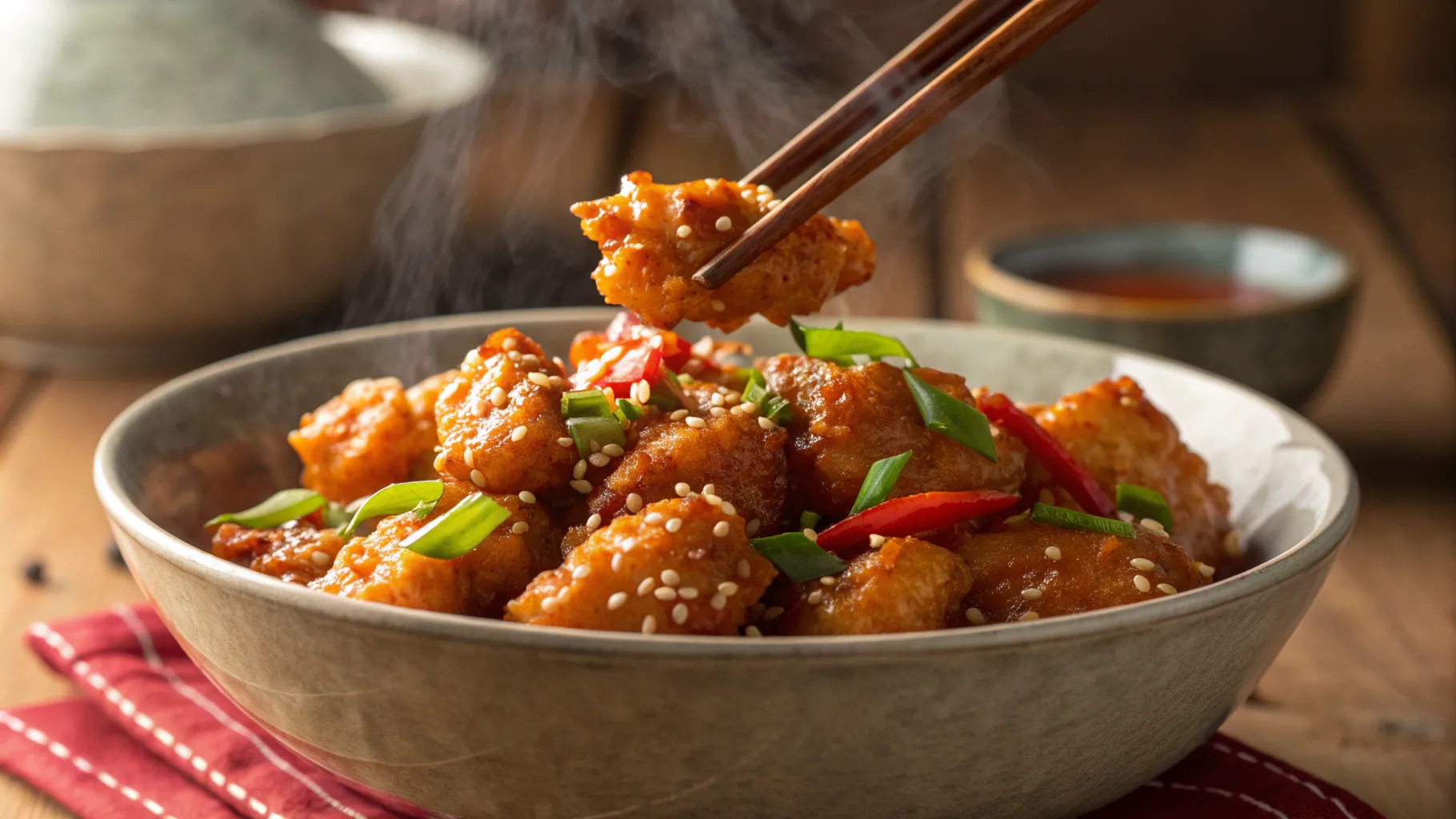
Plated sticky General Tso's chicken, glossy and crunchy

Step 5: Fry the chicken (temperature and timing)

Heat neutral oil (peanut or canola) to about 325°F in a pot with 1.5–2" depth (never fill more than half the pot). Fry in two batches to keep oil temp steady and avoid crowding.

  • Lower chicken gently; don’t touch for at least 60 seconds while the coating stabilizes.
  • After the first minute, nudge pieces gently to prevent sticking—be gentle; the crust is still fragile.
  • Fry 6–7 minutes total per batch until deeply golden.
  • Drain on a wire rack or paper towel-lined tray.

These come out looking gloriously “McNuggery” — perfectly breaded and with a deep crunch that lasts through many chews.

Step 6: Stir-fry, glaze, and finish

  1. Move the hot oil pot off the stove, heat a wok or large nonstick pan on high, and add a splash of oil.
  2. Stir-fry scallion whites (40–50 g) for ~60 seconds.
  3. Add cracked, deseeded chiles de árbol (5–8) for a minute to infuse the oil (optional).
  4. Add 20 g grated ginger and 20 g grated garlic; stir constantly 30–60 seconds until fragrant but not burnt.
  5. Pour the sauce around the hot edge of the wok to catch a bit of caramelization. Boil and reduce until it’s thickened by ~15–20% and leaves a trail.
  6. Add the fried chicken and toss over high heat for just a few seconds—enough for the coating to drink the sauce but not long enough to flatten every crisp spot.

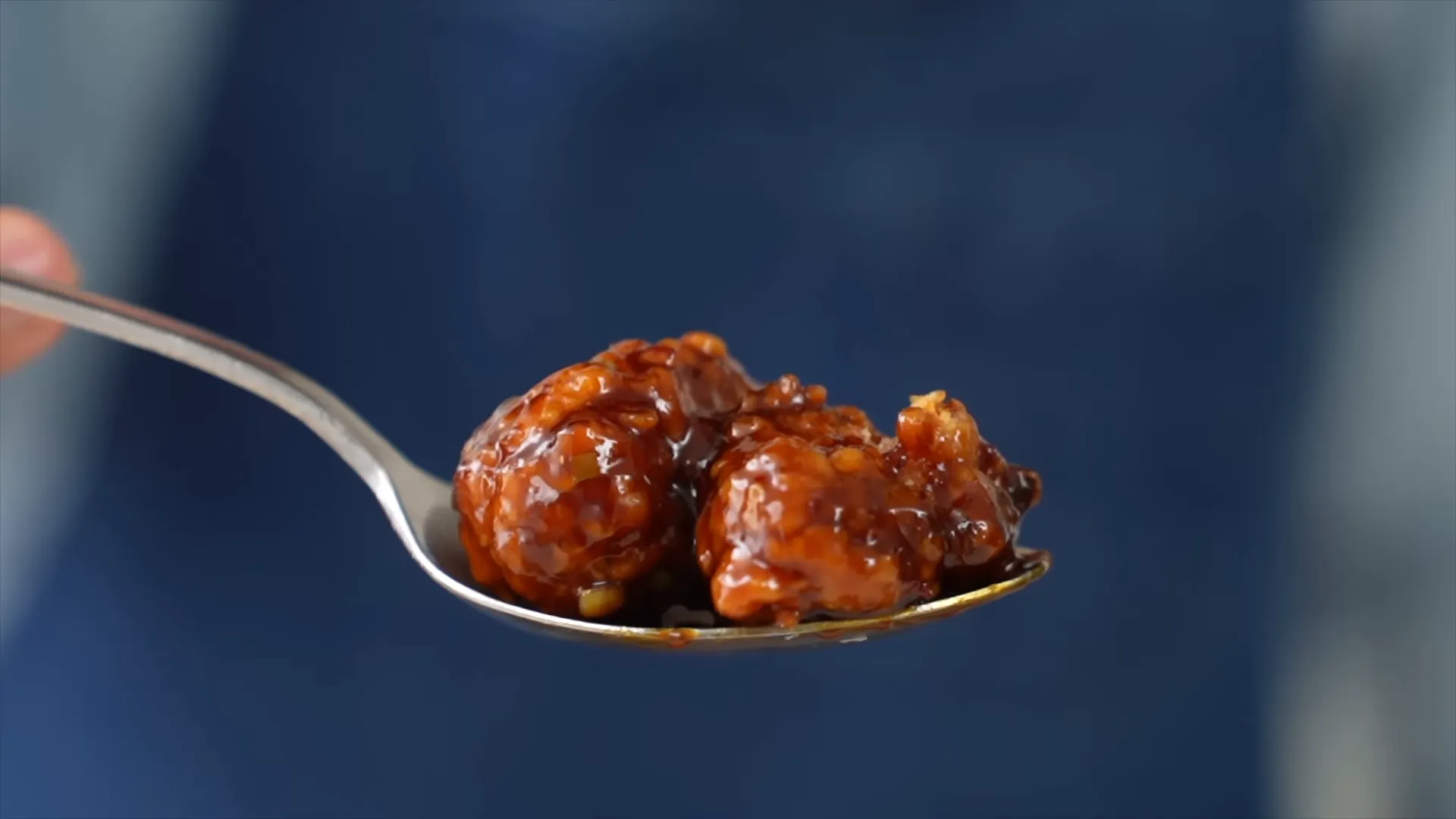
The result is a shiny, sticky, balanced sauce that’s sweet, savory, with a lively ginger brightness and a faint ketchup note for familiarity. Some pieces will be damp and saucy, others perfectly crisp—variety is the point.

Serving

  • Serve over steamed rice.
  • Garnish with the reserved dark scallion greens.
  • If you want extra sauce, spoon the leftover glaze over rice only—preserve as much texture as possible on the chicken itself.

If you’re experimenting with cooking recipes, healthy foods ideas, keep in mind this recipe is about technique more than health claims: the tips here (jaccard/piercing, baking soda, potato starch crags, chilled rest) translate to other fried proteins and help cut waste by boosting yield and texture.

Make a batch on a slow Saturday and you’ll understand why this version “ruins takeout forever.” It’s time-consuming but absurdly rewarding. Try it, tweak flavors to your taste, and enjoy the crunch.

"The breading stays totally stuck onto the chicken. It's insanely crunchy." — me

This General Tso's Chicken Ruins Takeout Forever — cooking recipes, healthy foods

Key takeaways I teach a few restaurant tricks (jacquarding, baking soda in the marinade, and a craggy dry mix) that lock in tenderness...
Featured

In my video I walk through how to turn a regular home oven into a New York–style pizza machine. This step‑by‑step cooking recipes, healthy foods guide focuses on dough technique, cold fermentation, oven setup, and finishing tricks that produce a large, lively slice with a crisp underside and tender chew. Whether this is the first pizza you’ve made or the hundredth, these methods will lift your results.

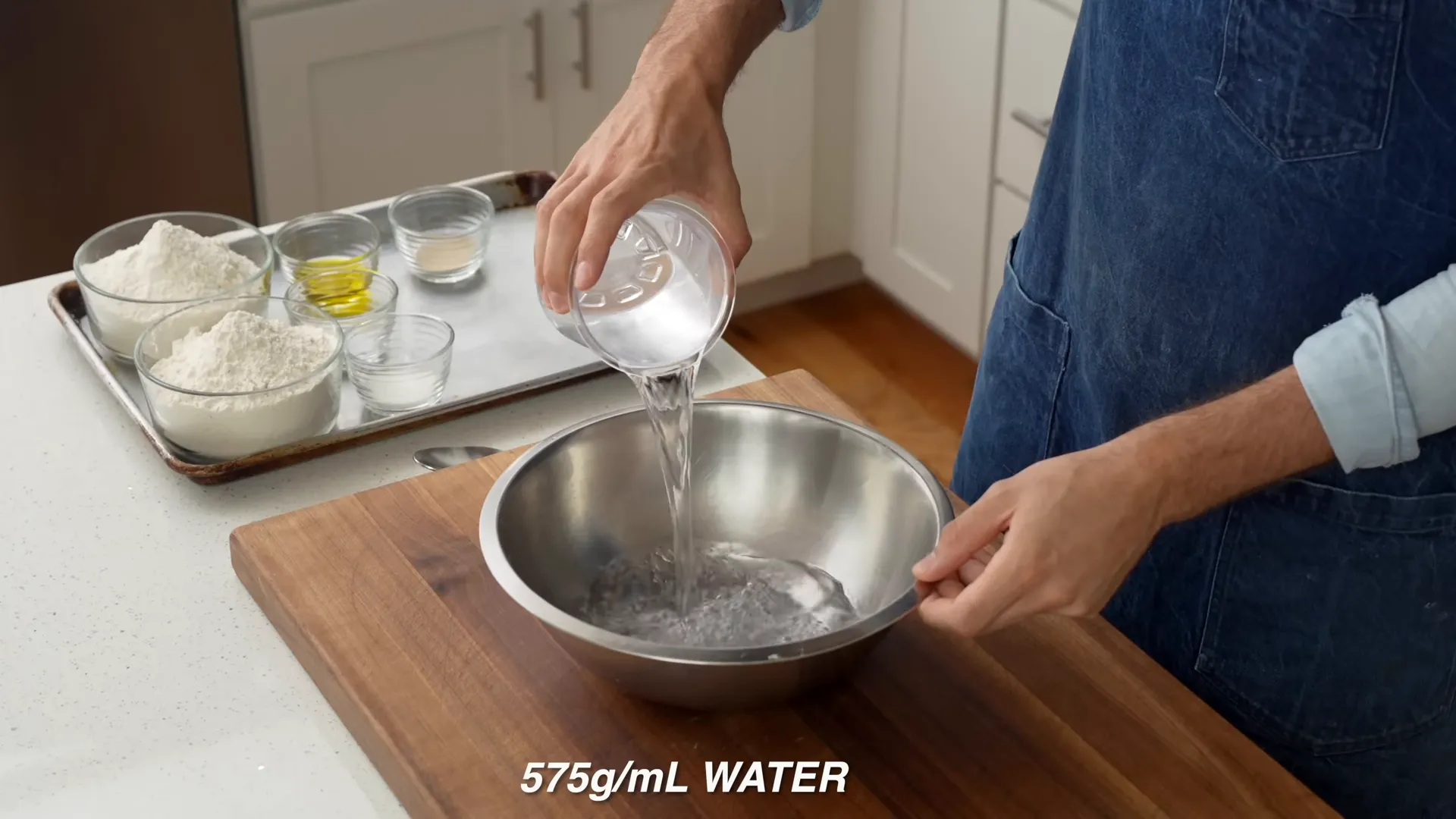
Me measuring water and adding yeast to a bowl

Step 1: Make the dough (mix, hydrate, and develop)

Ingredients for dough (makes 4 × 385g balls):

  • 575g water, 68–70°F
  • 10g instant yeast
  • 20g extra virgin olive oil
  • 25g sugar
  • 20g salt
  • 450g all‑purpose flour + 450g bread flour

Stir the yeast into the specified temperature water, add oil, sugar, salt, and both flours. Mix with a sturdy spoon until shaggy. Switch to a wet hand and use a claw squeeze motion for ~2 minutes to hydrate the dry lumps, then knead lightly for another minute to start gluten development. Aim for a final dough temperature of about 76–78°F.

“Nailing down the dough temperature like this might seem nitpicky, but it’s one of the main differentiators between professional‑level pizza and crappy stuff people make at home.”

Step 2: Strengthen with stretch‑and‑fold and cold ferment

Cover and rest 20 minutes. Perform a stretch‑and‑fold (pull until resistance, fold; repeat 4–5 times), round the dough, cover and rest another 20 minutes, then repeat once more. After ~60 minutes total you can divide and shape into four 385g balls. Place two per parchment‑lined half sheet, spray lightly with olive oil, cover, and refrigerate 24 hours for cold fermentation—this step is essential to achieve authentic flavor and texture.

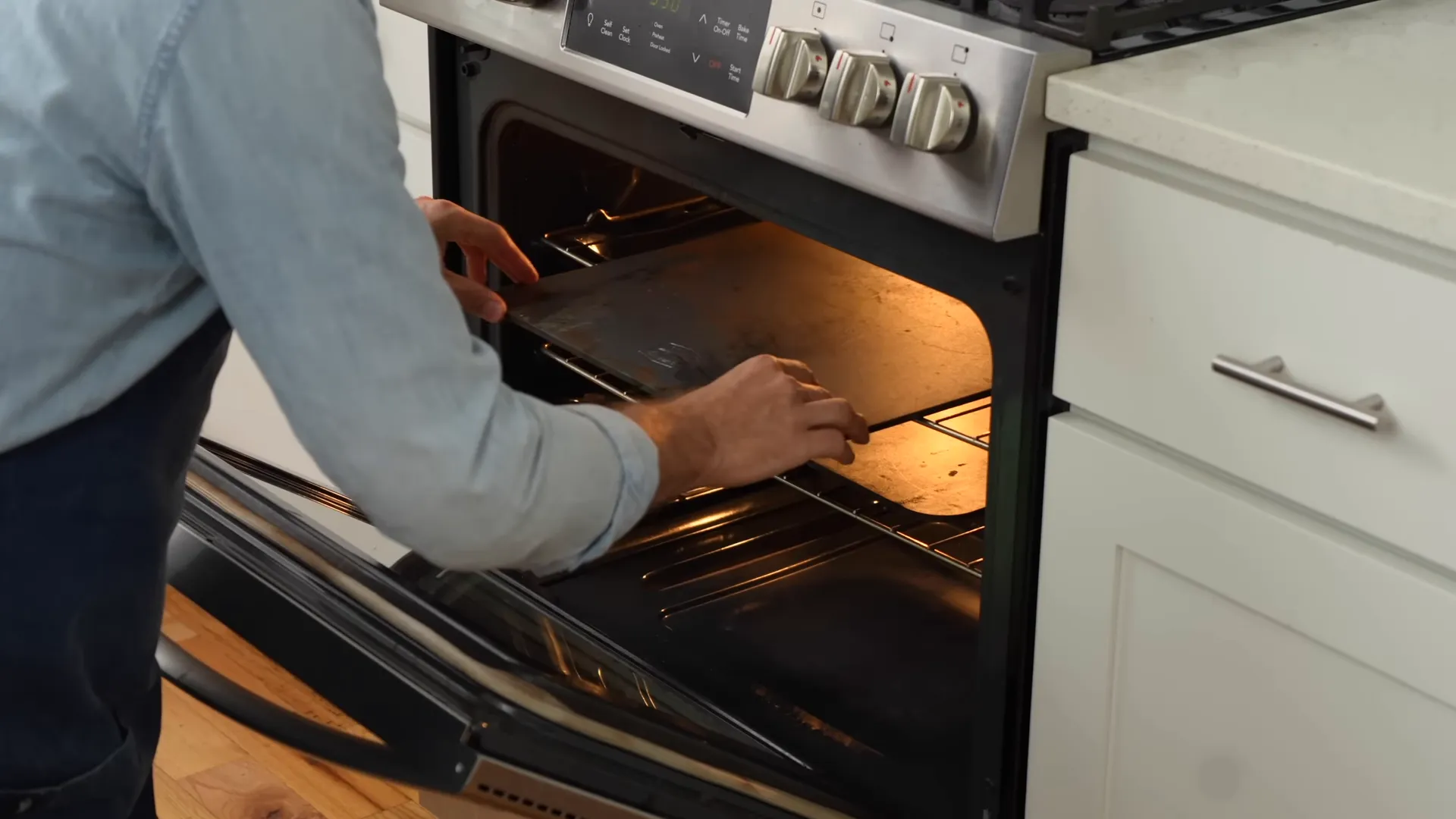
Two pizza steels heating in the oven, one above the other

Step 3: Preheat the oven and mimic restaurant thermal mass

Remove dough 45–60 minutes before baking to come to room temperature. Preheat the oven for at least 45 minutes to its highest setting (ideally 550°F). Place a primary pizza steel on the lower rack and a second steel ~6–8" above to simulate a professional oven: heat from above and below speeds the bake, traps a bit of steam, and prevents the cheese from becoming an oily mess.

Step 4: Make the sauce and prepare the cheese

Sauce: Stir 800g crushed tomatoes with 15g sugar and 8g salt. Purée half with an immersion blender and recombine to create a texture that’s both chunky and cohesive—this gives the orange, melty finish New York slices are known for.

Cheese: Grate equal weights (≈225g each) of part‑skim and whole‑milk mozzarella. The blend balances structure and creaminess; freshly grated cheese melts and behaves better than pre‑shredded blends.

Step 5: Shape, assemble, and bake

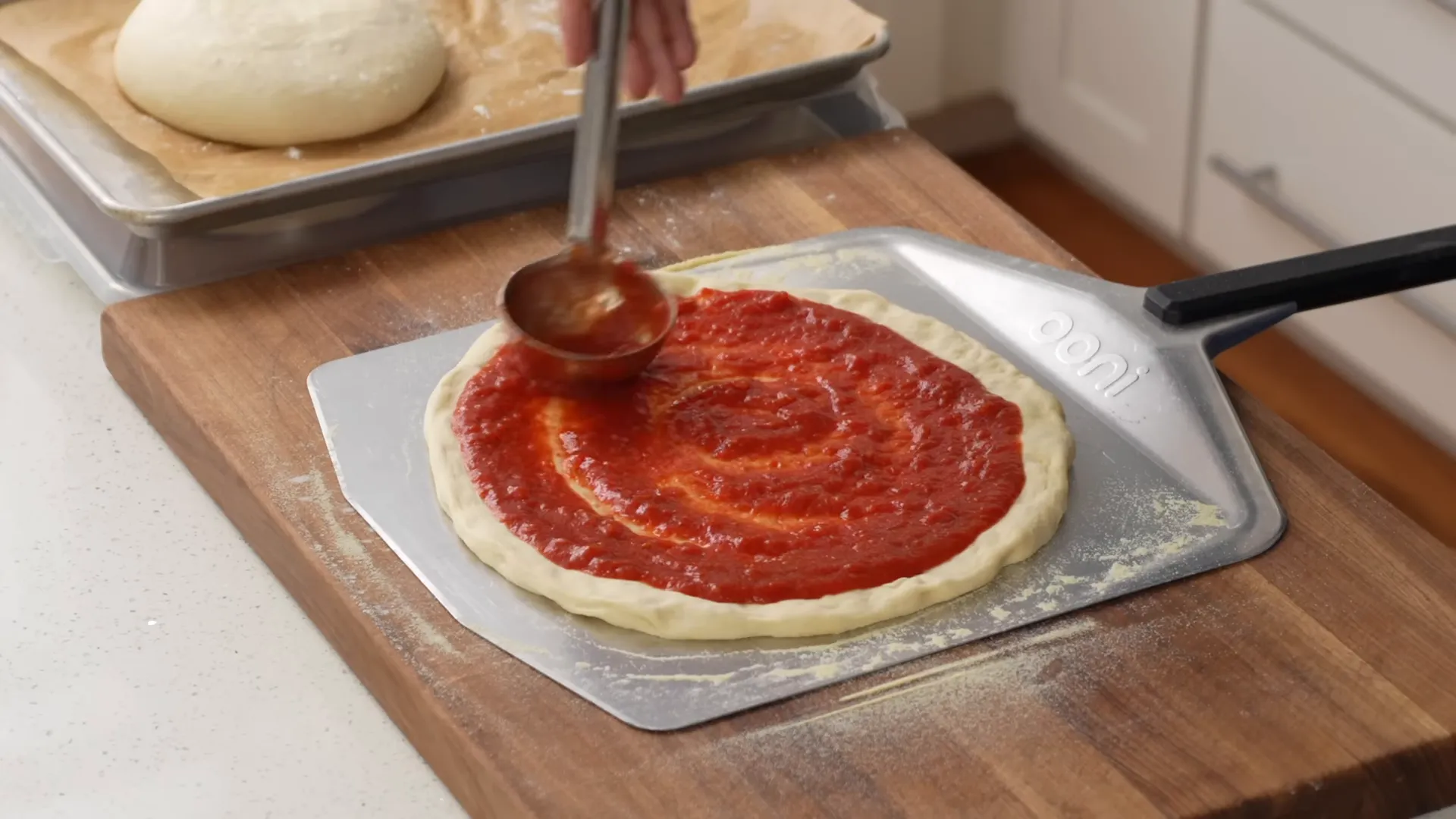
On a lightly floured surface, place the dough ball skin side down, degas big bubbles, and press a one‑inch rim so the center is thin. Work from ~8" to ~12–13" using fingertip stretches and the wrist‑flip technique, then transfer to a semolina‑dusted peel. Top with a heaping ladle (≈4–5oz) of sauce and a modest two handfuls of the cheese blend—don’t overload.

Assembled large pizza on peel, ready to launch into oven

Launch onto the bottom steel. Bake ~3 minutes, rotate 180°, then another 2–3 minutes until golden and bubbly (about 6–7 minutes total on a 550°F oven). Remove to a wire rack to avoid steaming the crust.

Step 6: Refresh slices like a New York slice shop

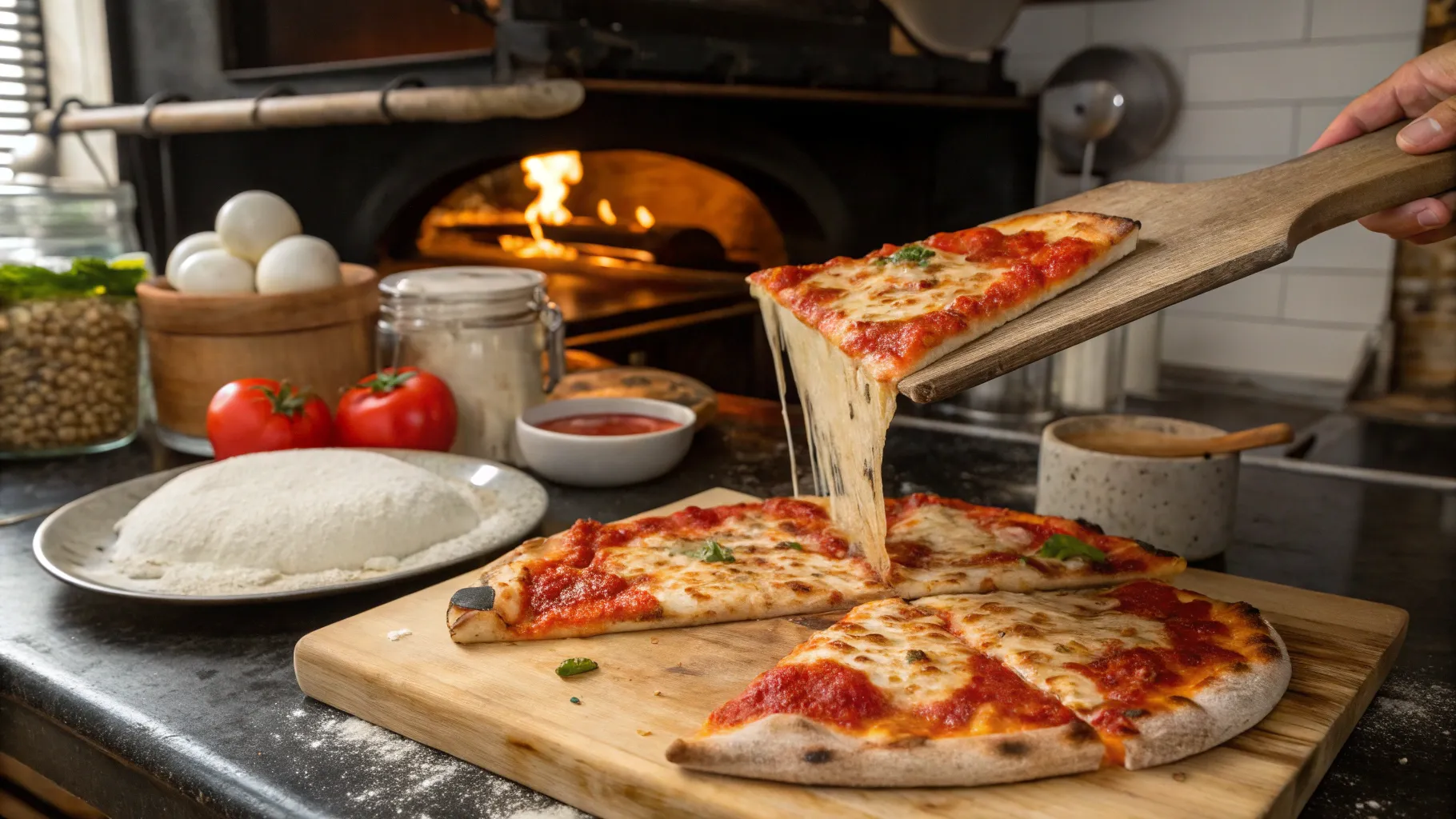
For peak experience, place a single slice on parchment directly on the hot steel for 90–120 seconds. This refire crisps the bottom for that whisper‑thin crunch, re‑melts the cheese, and reactivates the flavors. The result is a lively, dynamic slice—big, foldable, and utterly addictive.

This cooking recipes, healthy foods approach emphasizes technique over gimmicks: control dough temperature, give the dough time in the fridge, simulate oven thermal mass, and finish slices with a quick refire. Try it once and you’ll understand why cold fermentation and two steels matter so much.

Quick checklist

  • Dough temp: 76–78°F
  • Divide into 4 × 385g balls
  • Cold ferment ≥24 hours
  • Oven: 550°F with two steels (or highest possible)
  • Refire individual slices 90–120 seconds

If you follow this cooking recipes, healthy foods guide you’ll get the closest home approximation of a New York slice: crispy bottom, tender crumb, balanced sauce, and that irresistible cheese pull. Enjoy the process and the pizza.

Turn Your Home Oven into an NYC Pizza Machine — cooking recipes, healthy foods Guide

In my video I walk through how to turn a regular home oven into a New York–style pizza machine. This step‑by‑step cooking recipes, health...